Introduction to community ecology
Logistics reminders
- Semester project potential formats due at the end of this week
- In-class activity this week
So far…
Dynamics of population growth
The simplest model (exponential growth) did not account for individuals interacting with one another (constant \(b\) and \(d\))
The logistic growth model accounts for negative interactions between individuals, which causes \(d\) to increase and/or \(b\) to decrease as populations get bigger.
- This gives rise to a maximum stable population size (\(K\), or Carrying capacity)
Logistic model with Allee effects account for positive and negative interactions. These case growth rate to increase with population size when populations are small, but decline when populations get big.
- This gives rise to a “minimum” or “threshold” population size, below which the population is expected to go extinct.
Next unit
Community ecology adds further complexity: individuals of the same species can interact, but individuals of different species can also interact.
This can get complicated:
- Lots of species in any given community
- Lots of different types of interactions
- Interactions can change in different contexts

“The organism as the subject and object of evolution”
- “Organisms are both the consumers and the producers of the resources necessary to their own continued existence.”
White pine trees in New England make such a dense shade that their own seedlings cannot grow up under them, so hardwoods come in and take their place.
On the other hand, organisms may make an environment more hospitable to themselves.
Grazing animals actually increase the rate of production of forage, both by fertilizing the ground with their droppings, and by stimulating plant growth by cropping.
Beavers create ponds by felling trees and building dams; indeed, a significant part of the landscape in northeastern United States has been created by beavers.
The activity of any organism changes the environment in which it lives.
- The movement of an earthworm through soil aerates the soil
- The transpiration of a tree cools the atmosphere
- An organism may add or subtract resources that are available to other organisms
- In some cases, an individual will actually enter into the lives of other organisms
This can in turn shape the dynamics of other species.
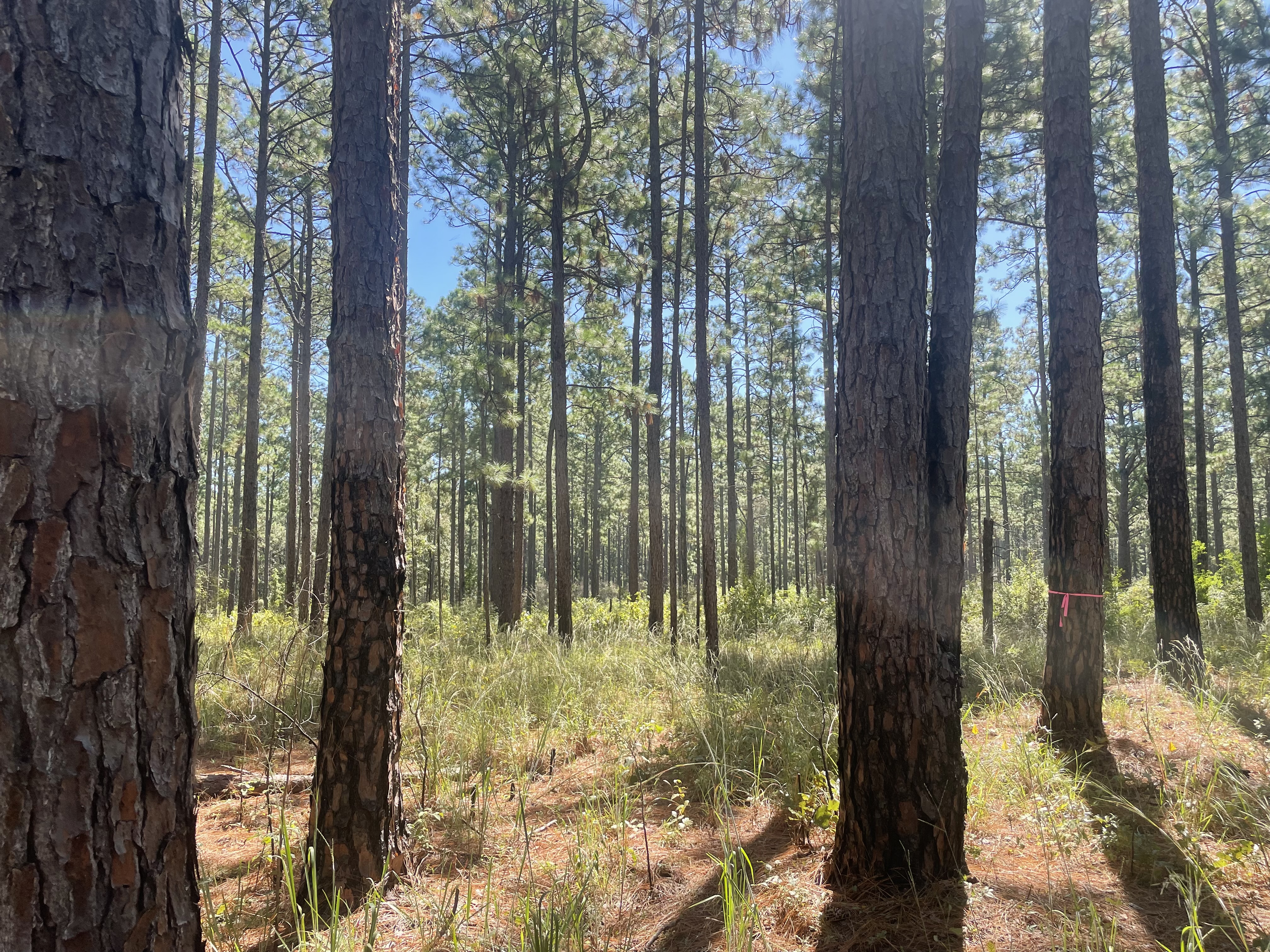
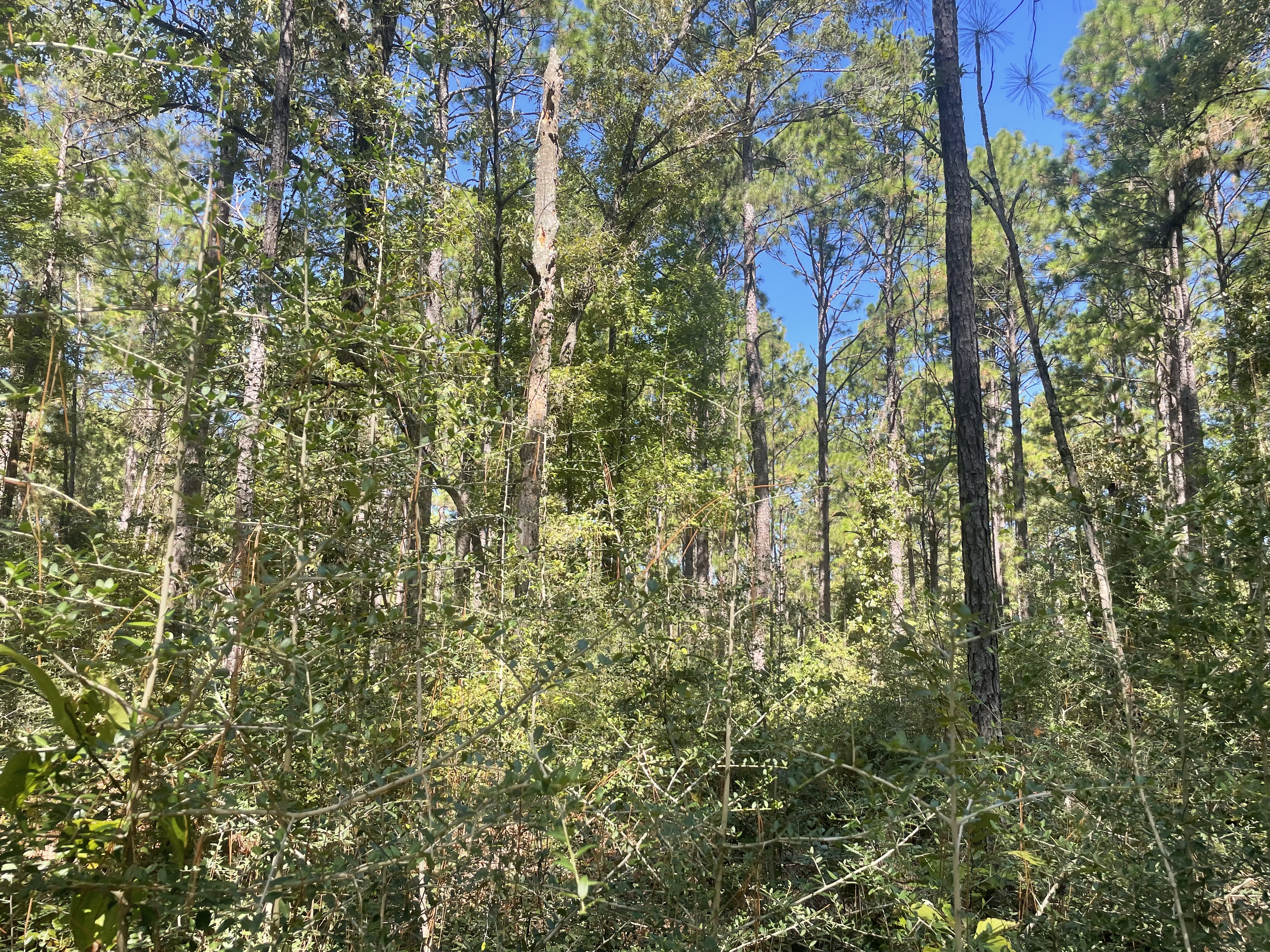
Community ecology
- The study of how interactions between species shape ecological communities
- Vast subject, given the wide variety of interactions that can unfold in nature
Keep track of the interactions in this video, and consider their consequences
Direct and Indirect interactions
For an hourlong documentary about hummingbirds
https://www.youtube.com/watch?v=yc8oRjt7jpkDirect and Indirect interactions

Direct and Indirect interactions
Direct and Indirect interactions

Conceptual model of a pollination network from MacGregor et al. (2023), Ecological Entomology
Direct and Indirect interactions
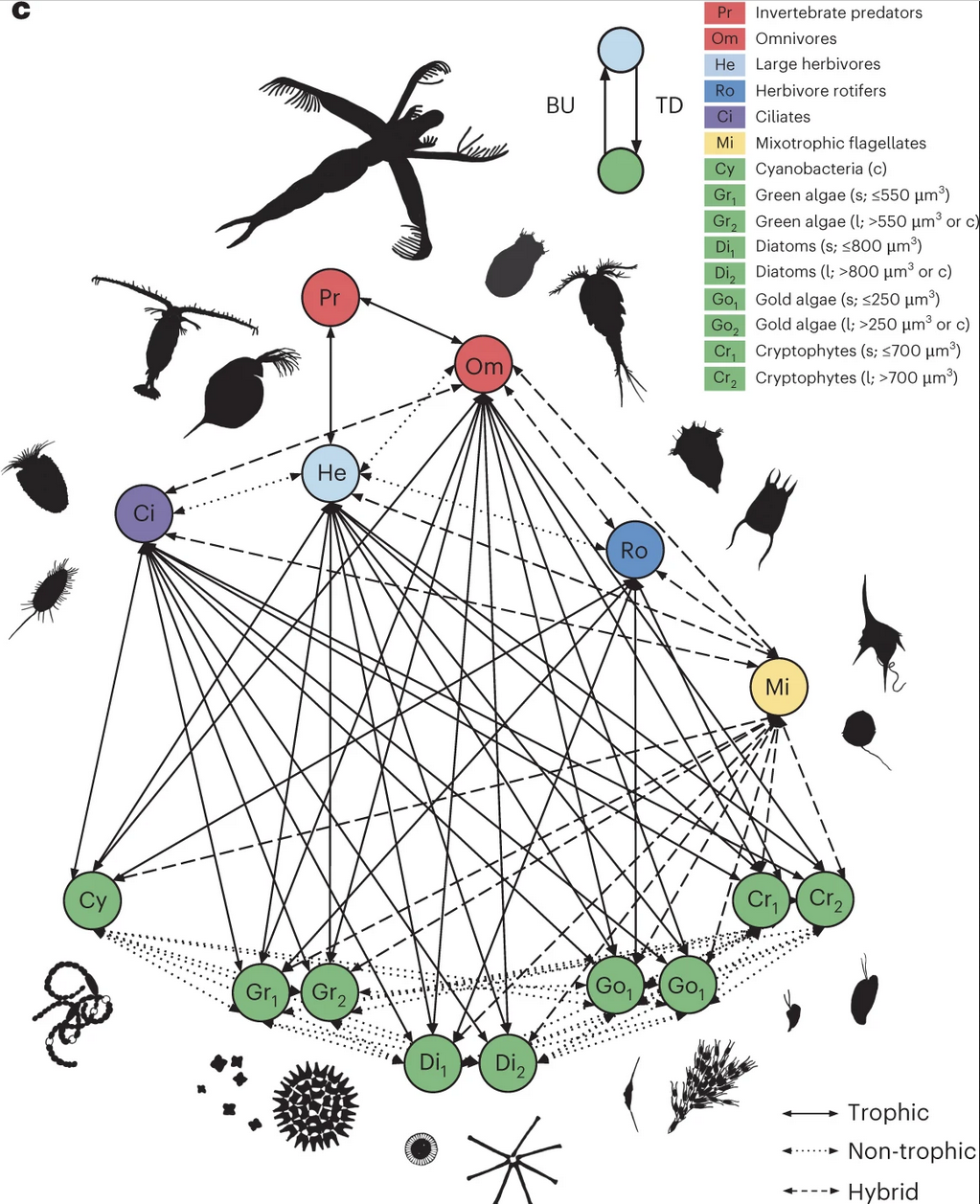
Conceptual model of a plankton network in temperate from Merz et al. (2023), Nature Climate Change
Approaches to community ecology
- Reductionism
- Study a complex system by breaking it down into component interactions
Photo from Smithsonian’s Tropical Research Institute
e.g. In a forest that houses hundreds of tree species, how do two interact with each other?
Approaches to community ecology
- Reductionism
- Study a complex system by breaking it down into component interactions
- e.g. In a forest that houses hundreds of tree species, how do two interact with each other?
- Where else do biologists take a reductionist approach?
Approaches to community ecology
- Holism
- Historically, some ecologists have favored a view of communities as “superorgansims”
- “Emergent properties” that are only evident when we study complex, messy networks
- Where else do biologists take a holistic approach?
Approaches to community ecology
In this class, we will explore both approaches…
- Reductionist approaches, e.g.
- Under what conditions can a pair of species that competes with one another for the same resources coexist?
- How do predator–prey interactions shape population dynamics?
- Under what conditions can a pair of species that competes with one another for the same resources coexist?
- Holistic approaches, e.g.
- How do disturbances (re)shape the structure of ecological communities?
- Under what conditions do interactions between species change from competitive to mutualistic?