A simple model of two-species competition, con’t

Interspecific competition

Lotka-Volterra competition equations:

\[\frac{dN_1}{dT} = r_1N_1(1-\alpha_{11}N_1 - \alpha_{12}N_2)\]

\[\frac{dN_2}{dT} = r_2N_2(1-\alpha_{21}N_1 - \alpha_{22}N_2)\]

Possible outcomes of two species competing:

  • Both species can have stable coexistence
  • Species 1 can win, and exclude Species 2
  • Species 2 can win, and exclude Species 1
  • “It depends” – whichever species comes first, wins in competition.

How to distinguish between the possible outcomes?

We are often interested in understanding how it is that species can coexist

  • Organisms need basically the same set of resources, yet in many systems we see lots of diversity
  • Alternatively, this diversity is challenged in some systems, e.g. due to species invasions.
  • So, how can competition promote coexistence?

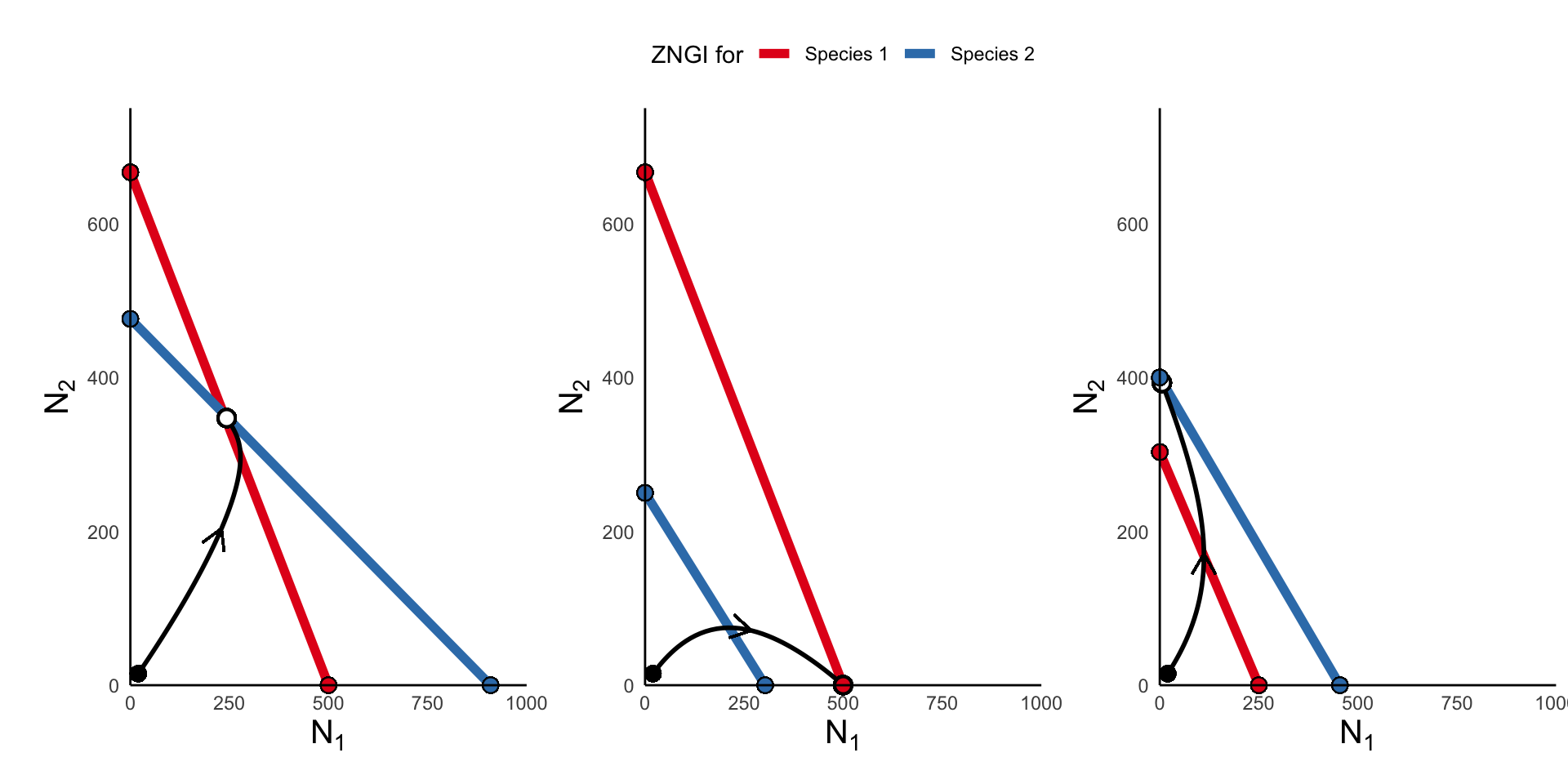
Possible outcomes under competition:

Making sense of coexistence

But before that, let’s make sense of competitive dominance, as it is conceptually more straightforward

  • We have seen that dominance will happen whenever one isocline is “outside” the other, i.e. no intersection
    • There can be no condition under which \(\frac{dN_1}{dt} = 0\) AND \(\frac{dN_2}{dt} = 0\), which means no equilibrium possible with both species
    • So, the only equilibrium points are when one species is absent.

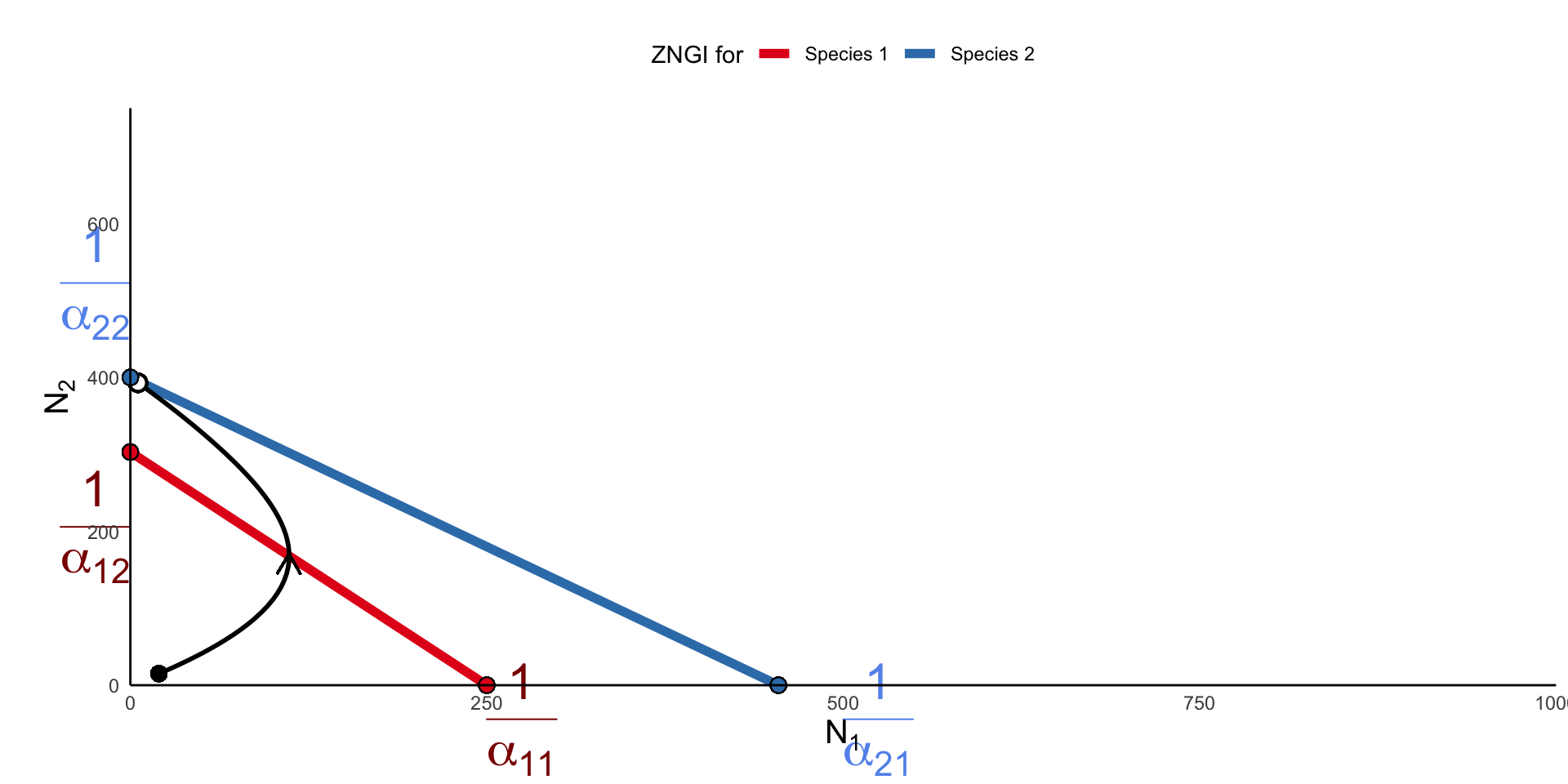
Why would one isocline be “outside” another?

Why would one isocline be “outside” another?

  • Consider a case where species 2 “wins”:
Why would one isocline be “outside” another?

  • Consider a case where species 2 “wins”:
Why would one isocline be “outside” another?

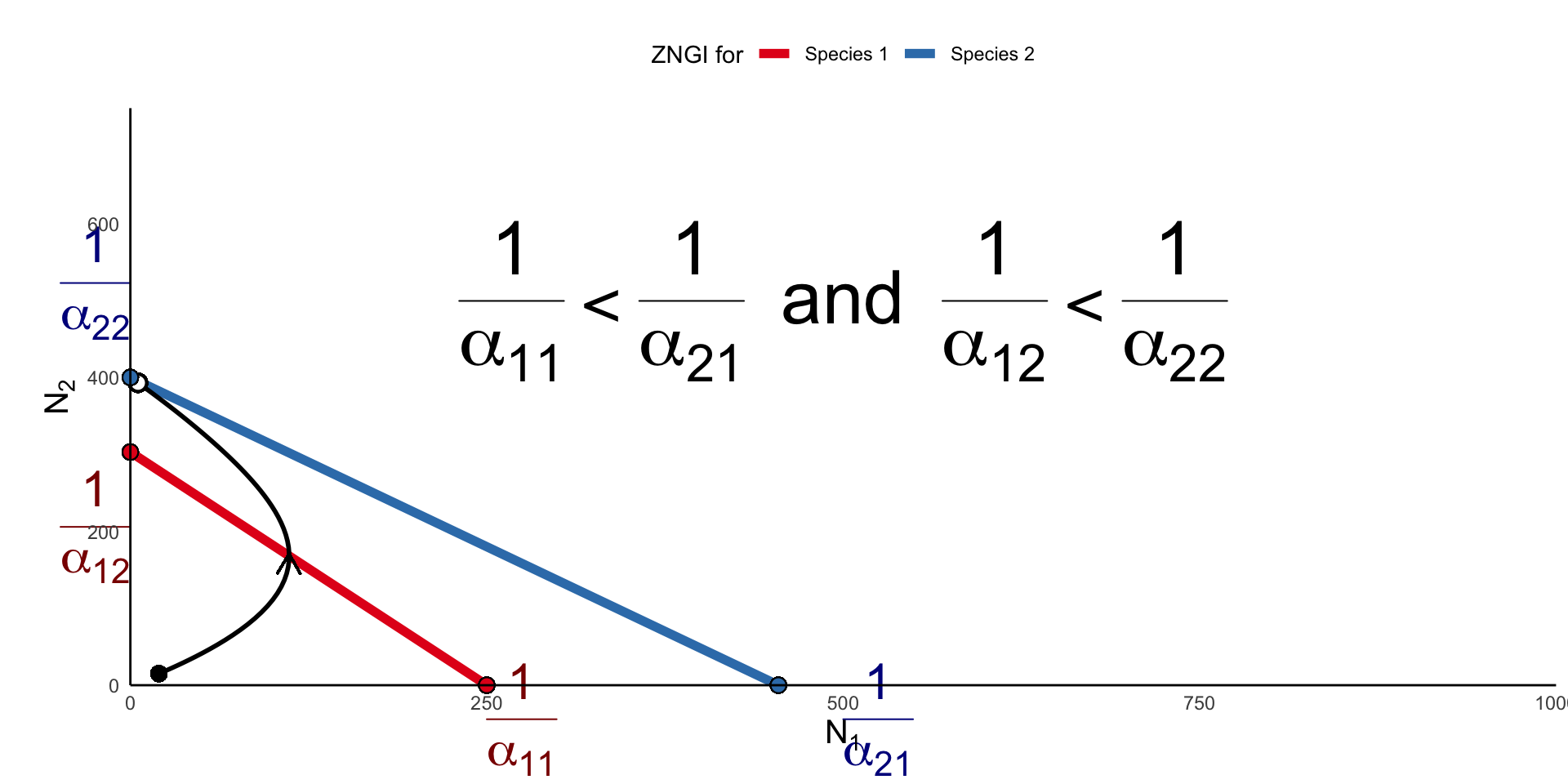
  • Consider a case where species 2 “wins”:
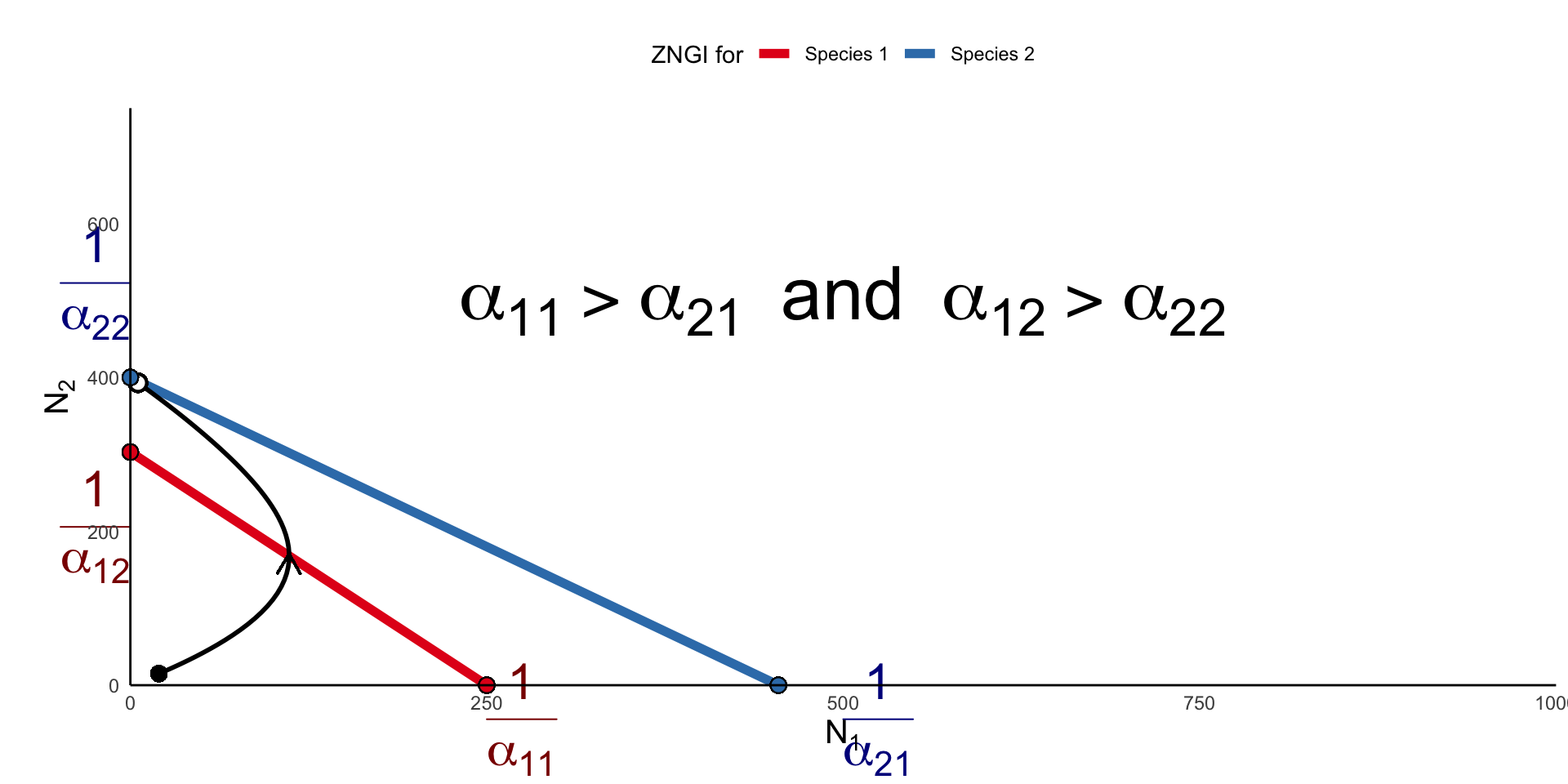
Species 1 is strongly limited by Species 1, AND
it is strongly limited by Species 2

Making sense of competitive dominance

If a species is especially sensitive to competition from con-specifics AND from the other species, it is more likely to be excluded

What supports species coexistence?

Let’s follow a similar logic for understanding why competition could support coexistence
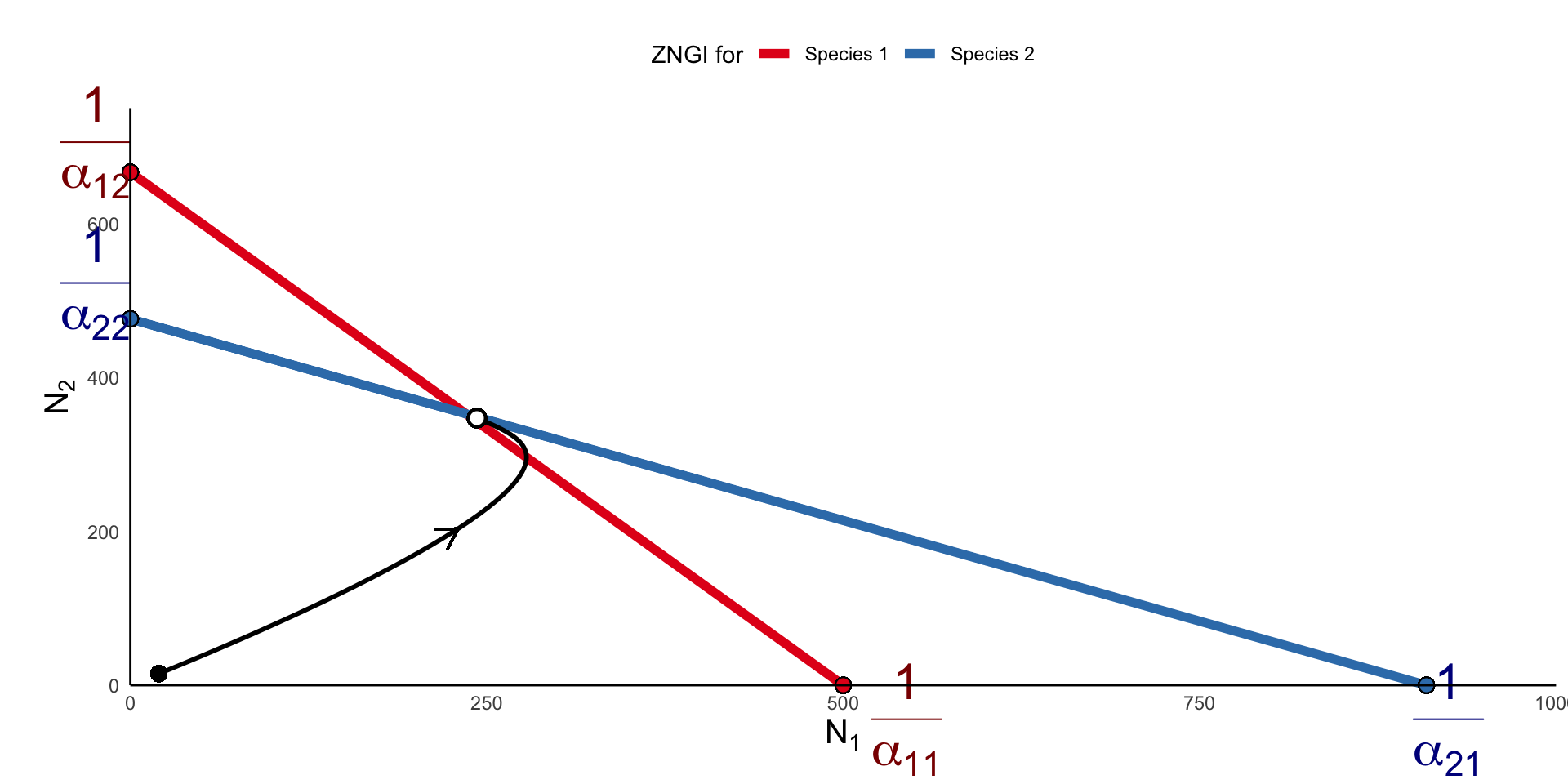
What supports species coexistence?
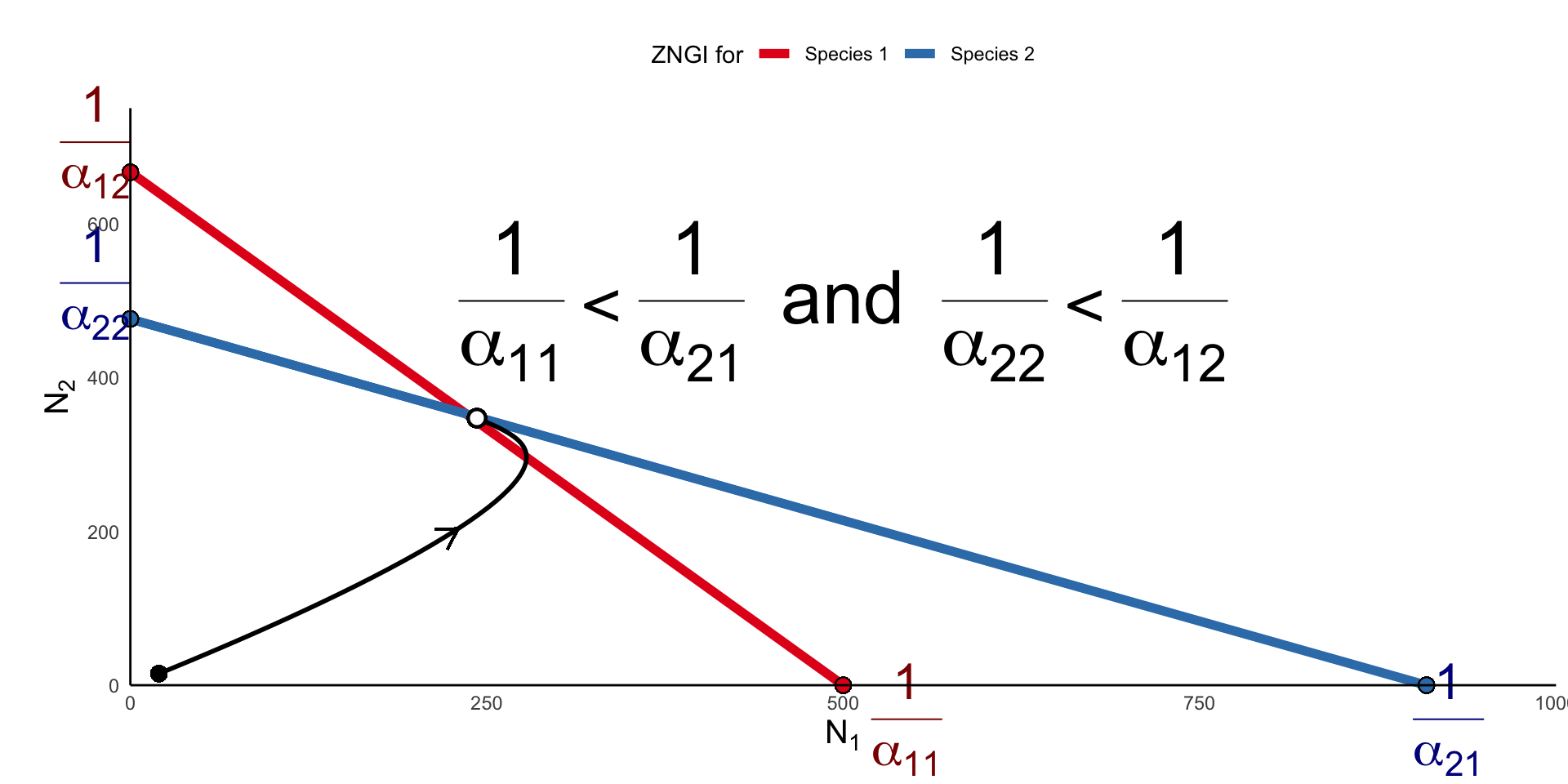
What supports species coexistence?
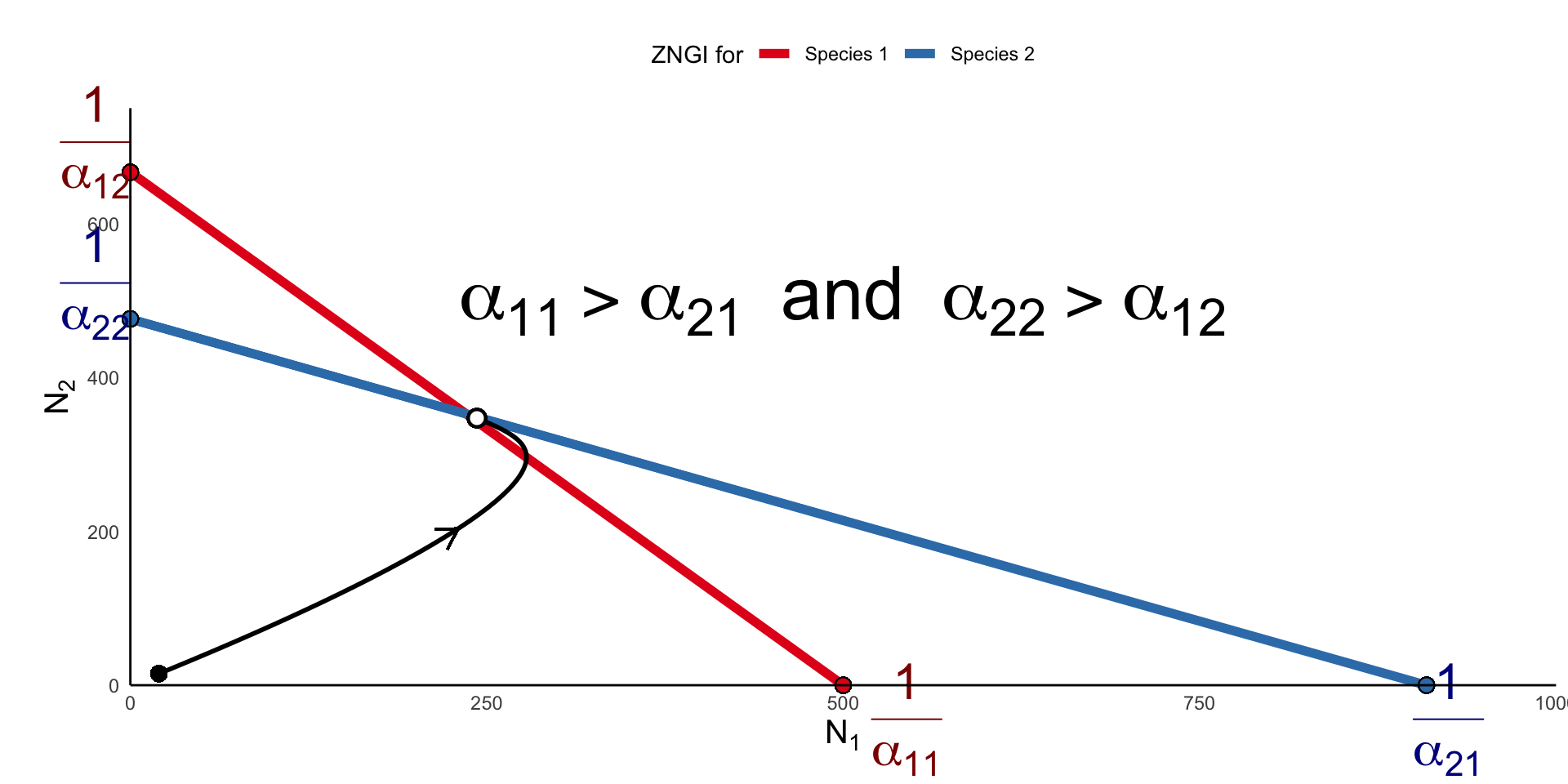
Biologically, this means that for coexistence to occur, each species should limit itself more than it limits the other

  • When would this happen?

  • If species have distinct niches, competition might be stronger within a niche than between niches.

    • e.g. Each species specializes on a different type of resource
    • e.g. Each species uses the same resource but at different times of the year
    • e.g. Each species has its own pathogens or mutualists that don’t affect the other

What gives rise to niche separation?

  • Classically, resource separation
    • E.g. two herbivore species eat grass, but each has its preferred grass
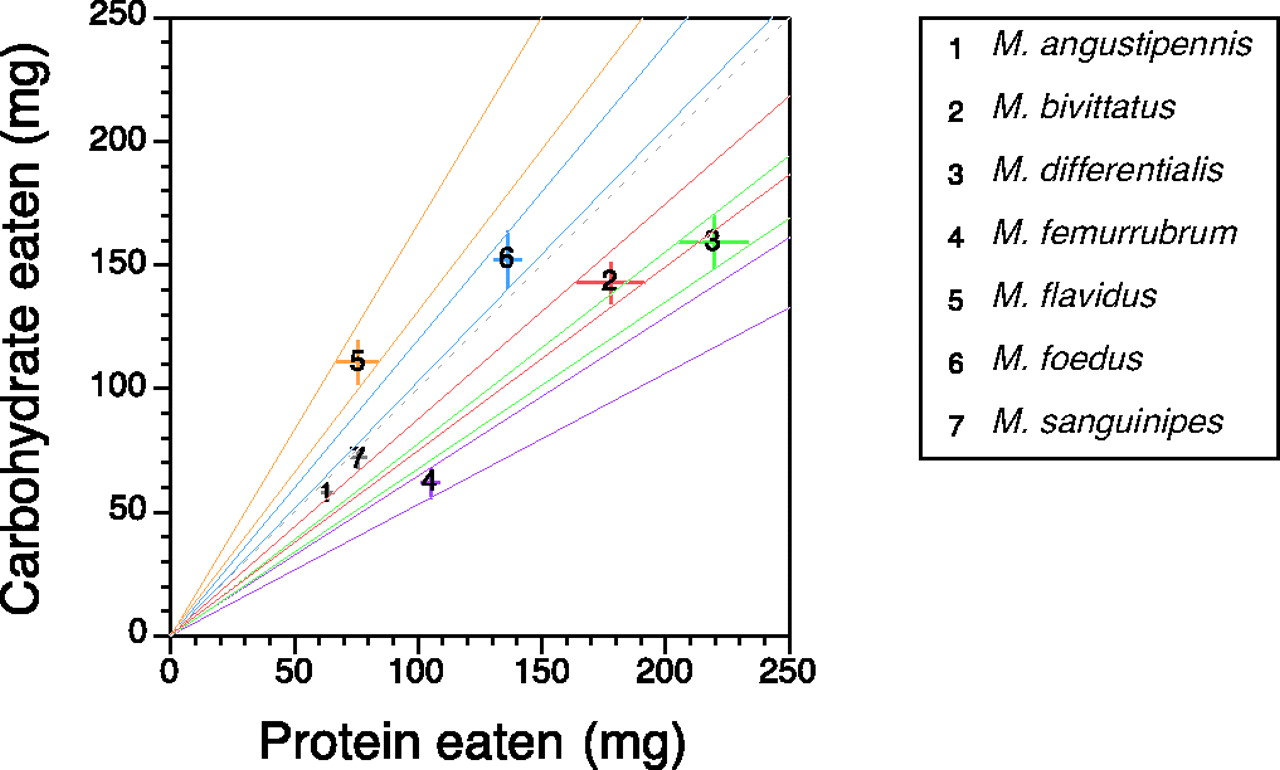
Dietary requirements of seven co-occurring grasshopper species.
From Behmer and Joern 2008, PNAS

What gives rise to niche separation?

  • Time is also a resource
    • E.g. two plants need the exact same set of resources, but one active in early-spring and other in late-spring
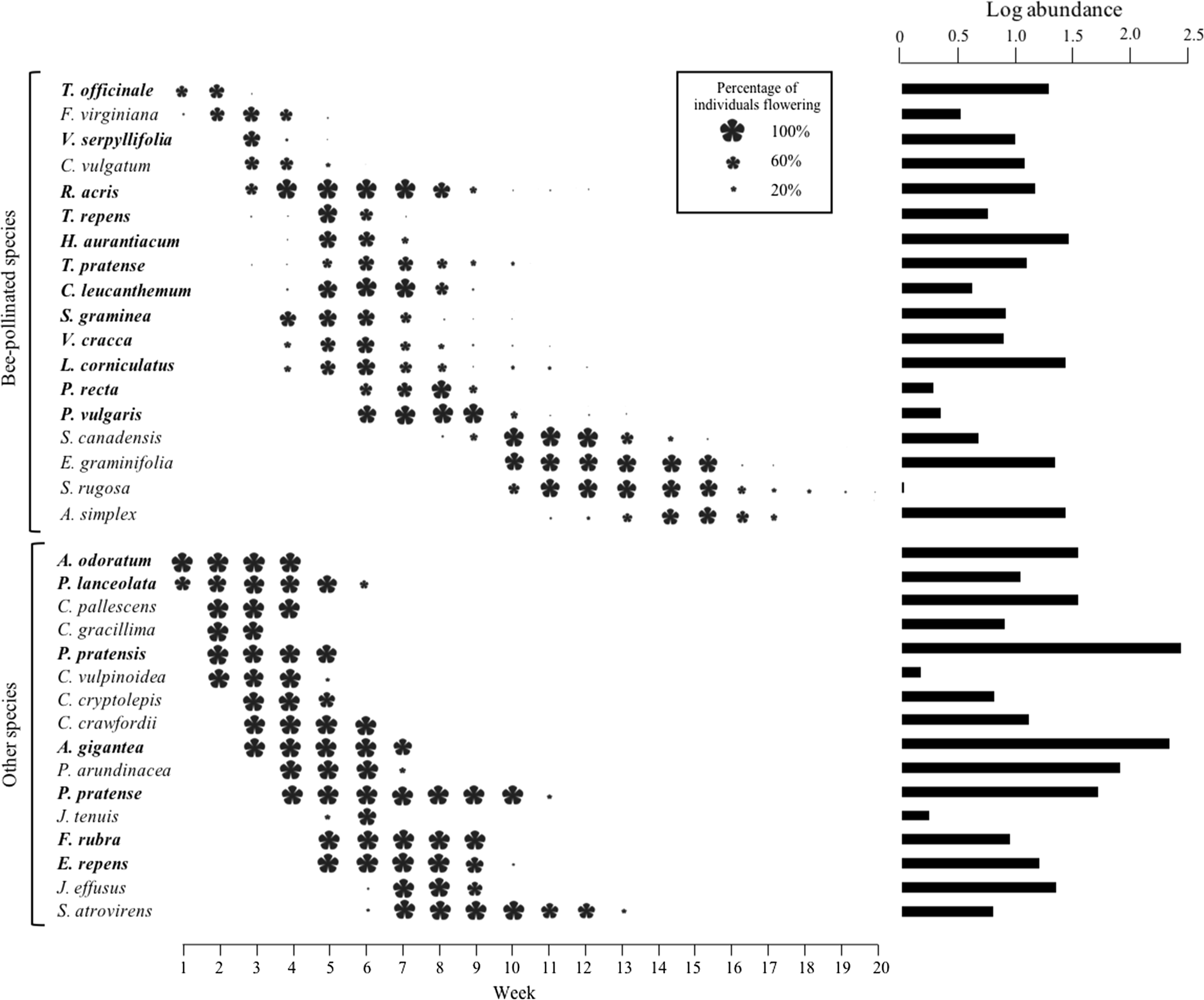
Variation in flowering phenology of spring wildflowers in Ontario, CA.
From Jensen et al. 2019, Oecologia

What gives rise to niche separation?

  • Space is also a resource
    • E.g. two birds eat similar insects, but primarily hunt in distinct microhabitats
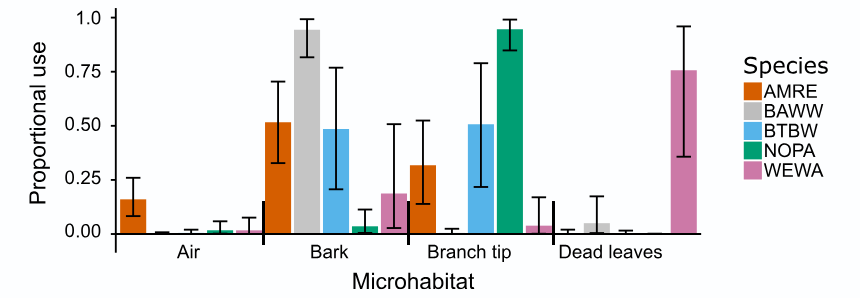
Variation in microhabitat preferences of five warbler species in Jamaica
from Kent and Sherry 2022 Ecology (based at Tulane Univ.)

So What?

  • How does knowing about competition and coexistence among two species help us make sense of patterns in nature?

  • In other words, we are asking a question that many of you have raised in discussion:

    • What are ways in which these reductionist approaches help us make sense of the whole?

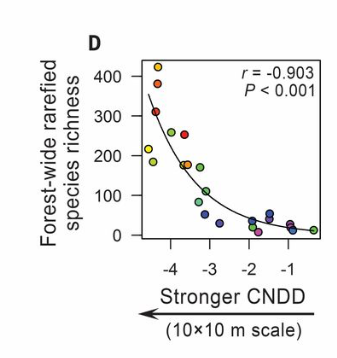
General insight from competition model: more coexistence under stronger within-species limitation than between-species limitation

  • This is true in a simplified two-species model, but is it true in “real” communities, which almost have more than 2 species?
  • Is there more biodiversity in forests where within-species limitation is stronger?

Data from “Plant diversity increases with the strength of negative density dependence at the global scale”, Lamanna et al. 2017
Extensions of coexistence theory to other domains
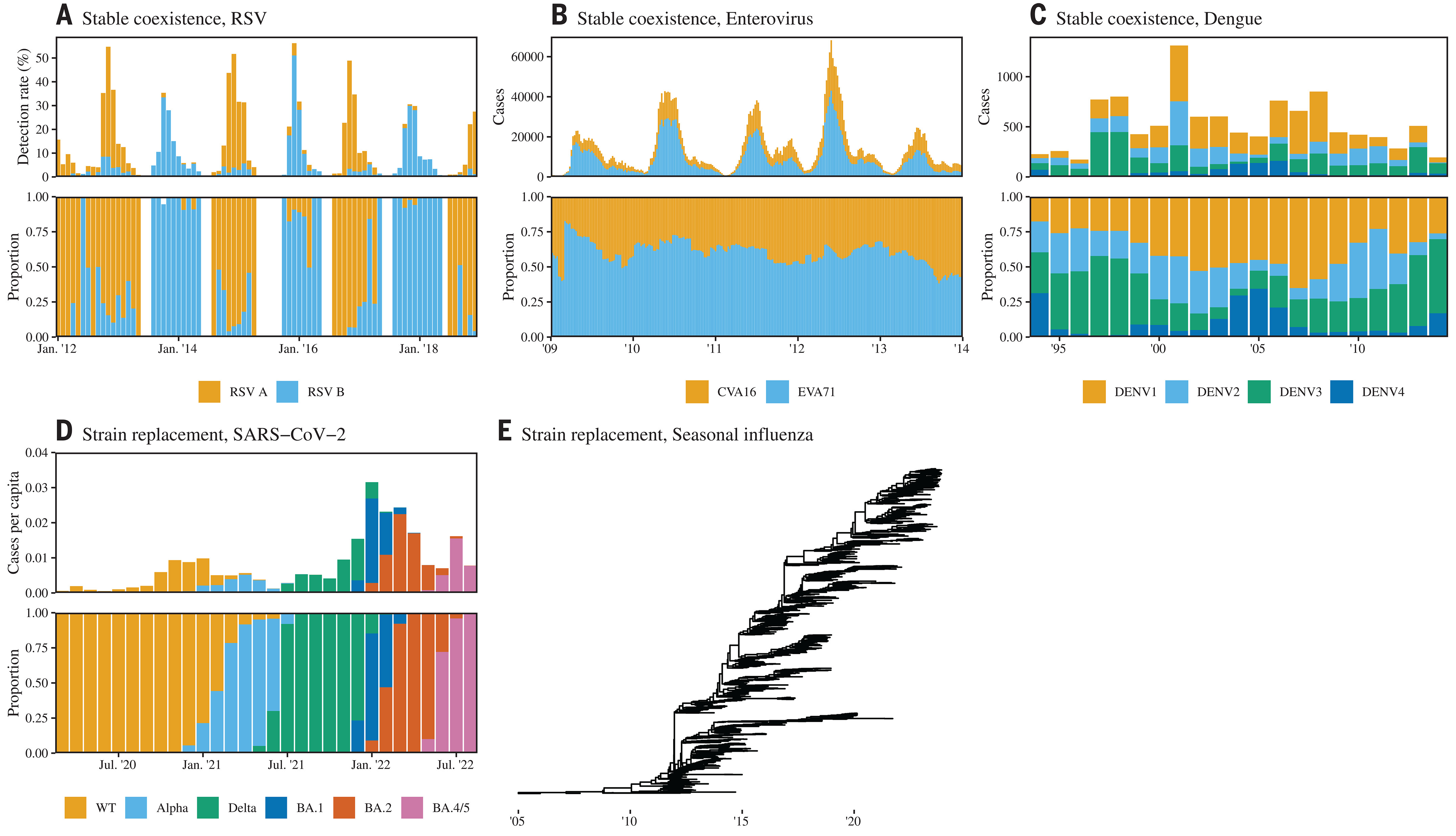
  • For the last 100 years, ecologists have applied these models to think about interactions and coexistence of species in “nature”

  • Recently, ecologists have been collaborating with epidemiologists to investigate this phenomenon in the context of infectious diseases

  • e.g. Why do strains of flu fluctuate over years?

  • e.g. Why, in some cases, are humans affected by multiple strains of the same virus, while for other viruses, emergent strains “replace” existent ones?

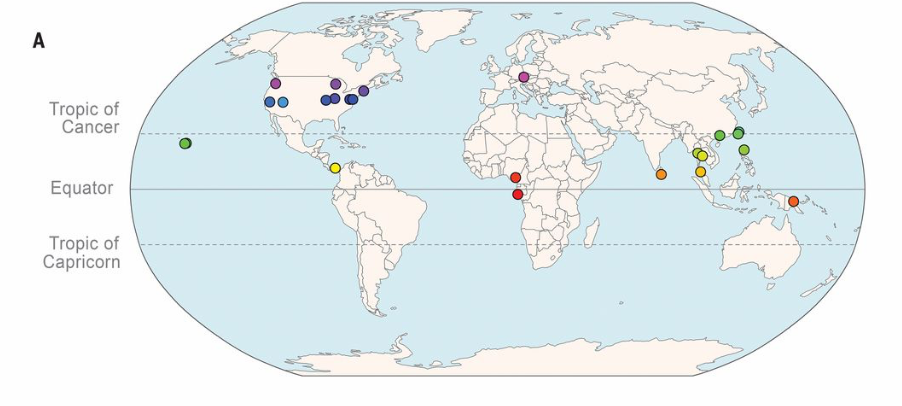
Extensions of coexistence theory to other domains

Figure from Park et al. in Science, 2024, “Predicting pathogen mutual invasibility and co-circulation”

We address this gap by developing a pathogen invasion theory (PIT) based on modern ecological coexistence theory and testing the resulting framework against empirical systems. […] PIT unifies existing ideas about pathogen co-circulation, offering a quantitative framework for predicting the emergence of novel pathogen strains