Global and local patterns of biodiversity
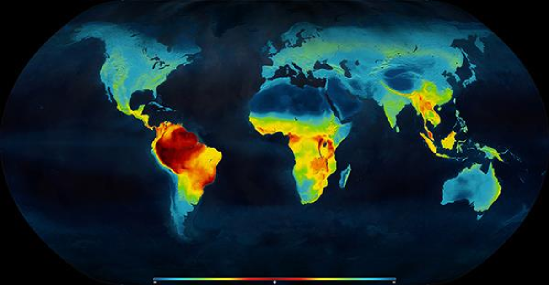
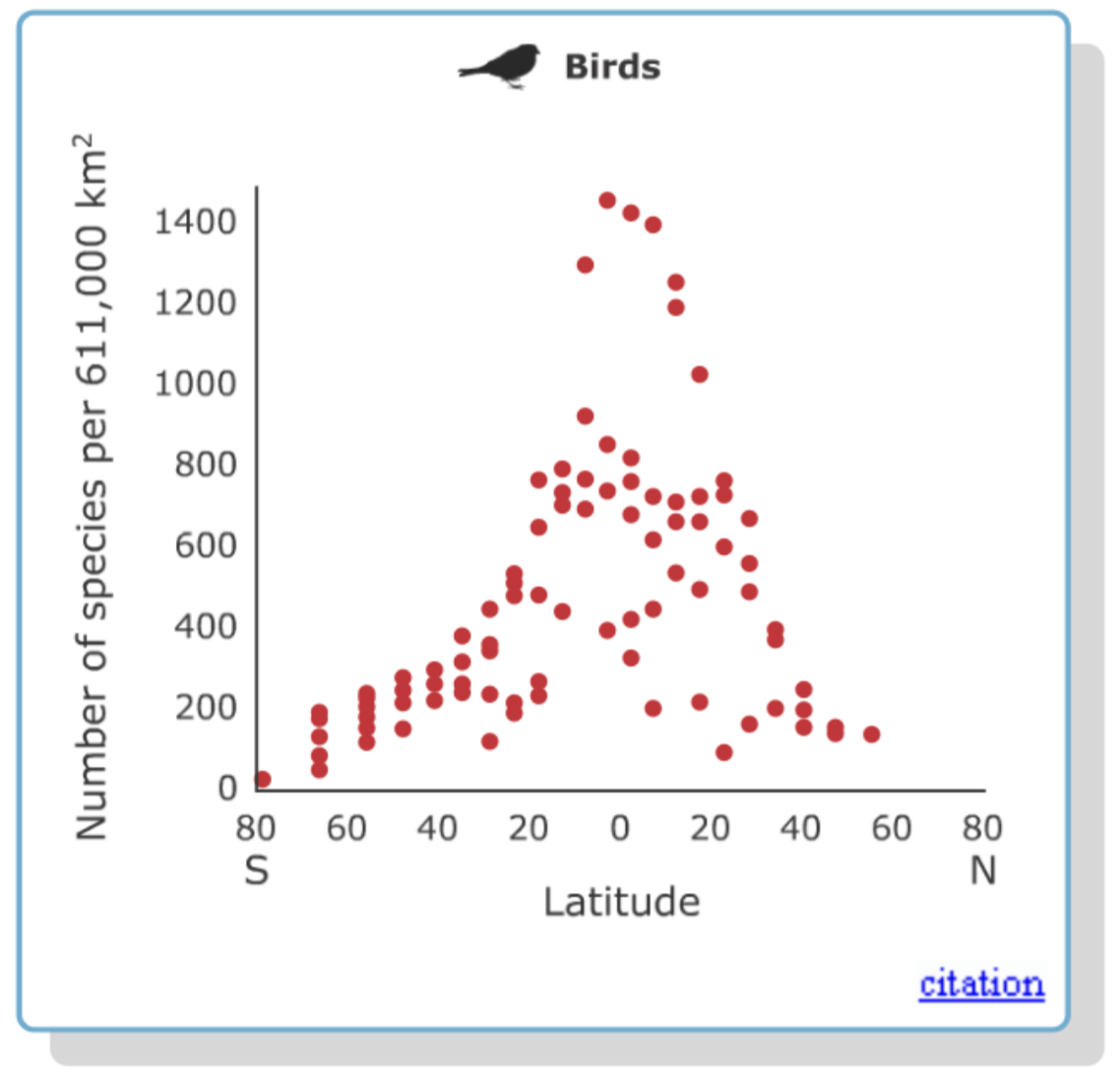
We know that life on Earth varies predictably
![]()
Diversity of vertebrate species, from Mannion et al. 2014
![]()
Diversity of amphibian species, from Anton-Pardo, 2019
![]()
Diversity of mammal species, from Davies et al. 2008
![]()
Diversity of Streptomyces bacteria, from Andam et al. 2016
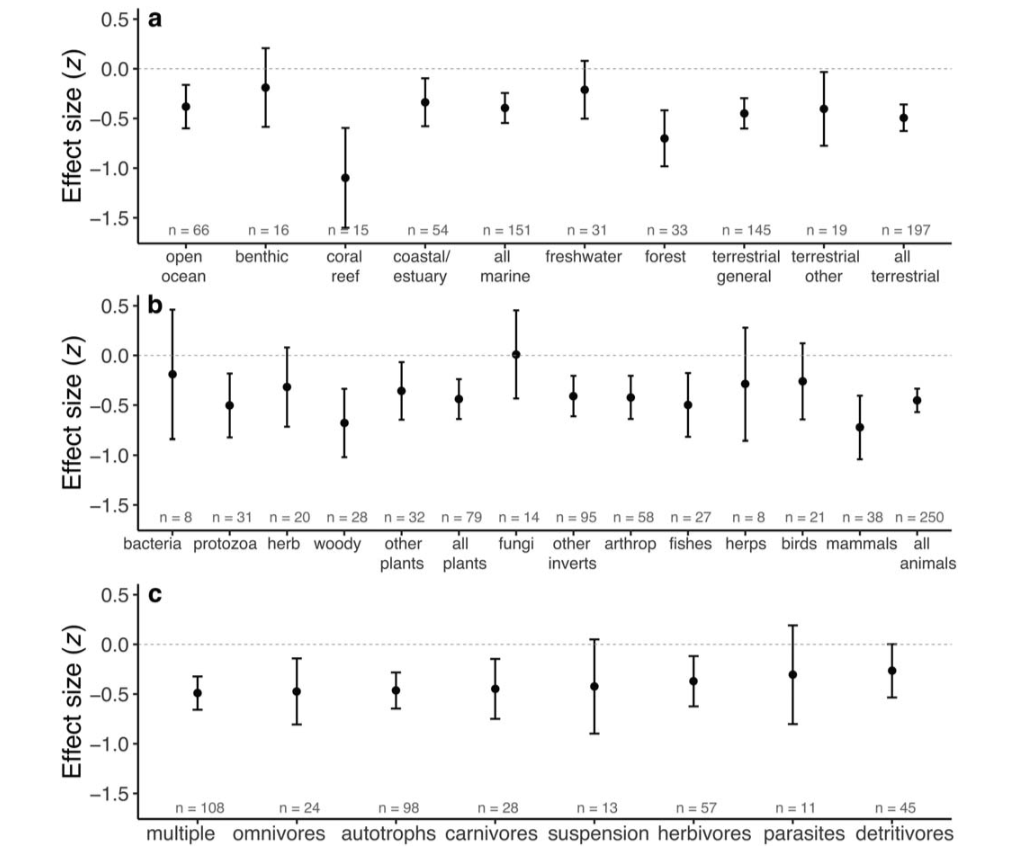
We can evaluate the slope of the diversity–latitude relationship
The latitudinal diversity gradient seems ubiquitous
Group discussion: Why does the latitudinal diversity gradient exist?
Why does the LDG exist?
Many potential explanations:
- Null model: there’s more “tropical” area than temperate area
But per-kilometer, tropical regions are often more diverse
![]()
Why does the LDG exist?
Many potential explanations:
- Null model: There’s more “productivity” in the tropics, so more life can accumulate
Why does the LDG exist?
Many potential explanations:
- Null model: Tropical areas have been around longer (or have been habitable for longer) and so have accumulated species
Why does the LDG exist?
Many potential explanations.
If tropics are not just more biodiverse because there’s more area, or more productivity, or more time for things to accumulate, then there must be something special:
- Higher rates of new species arising (speciation)
- Lower rates of species going extinct
- Higher rates of species immigrating in
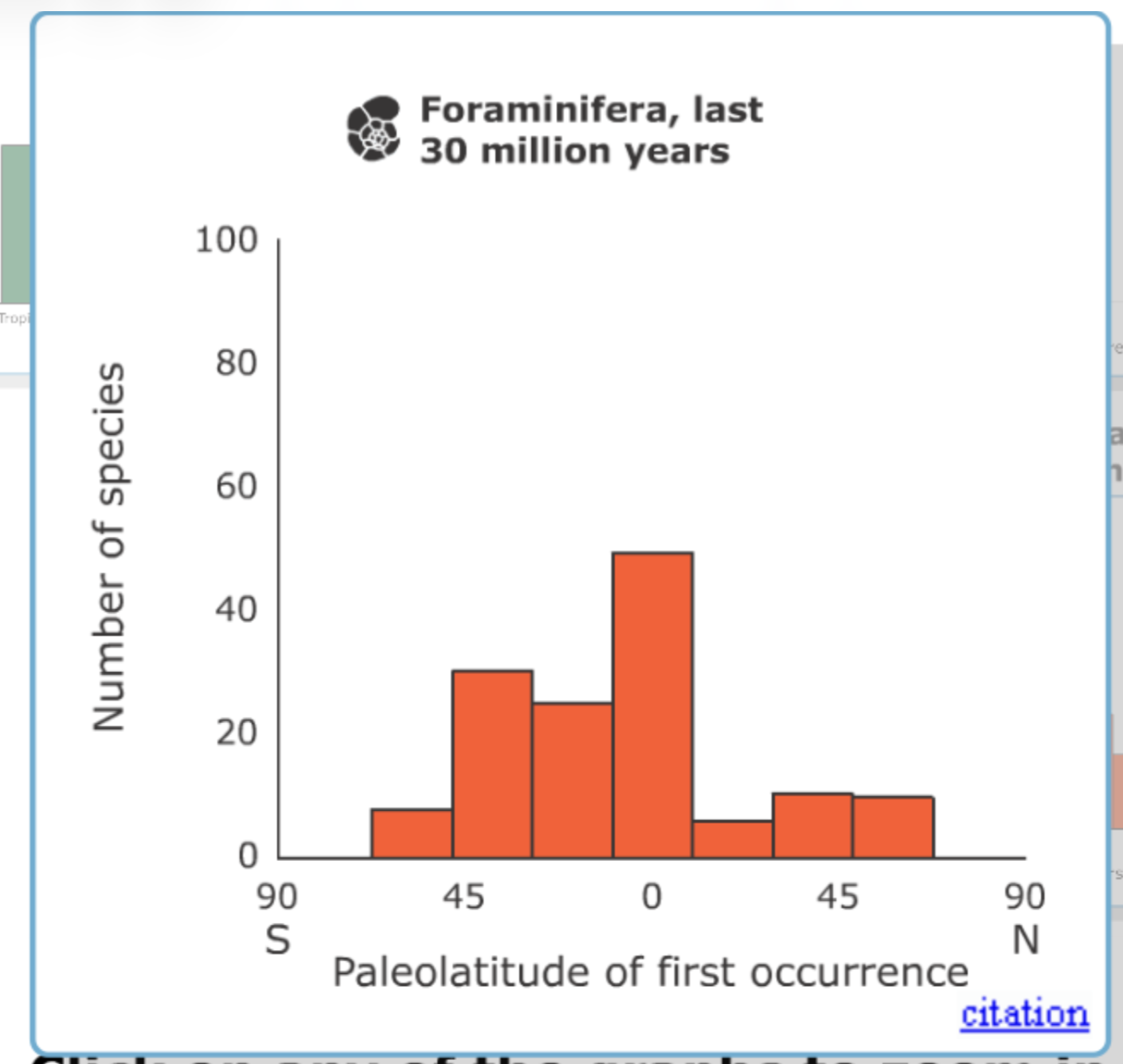
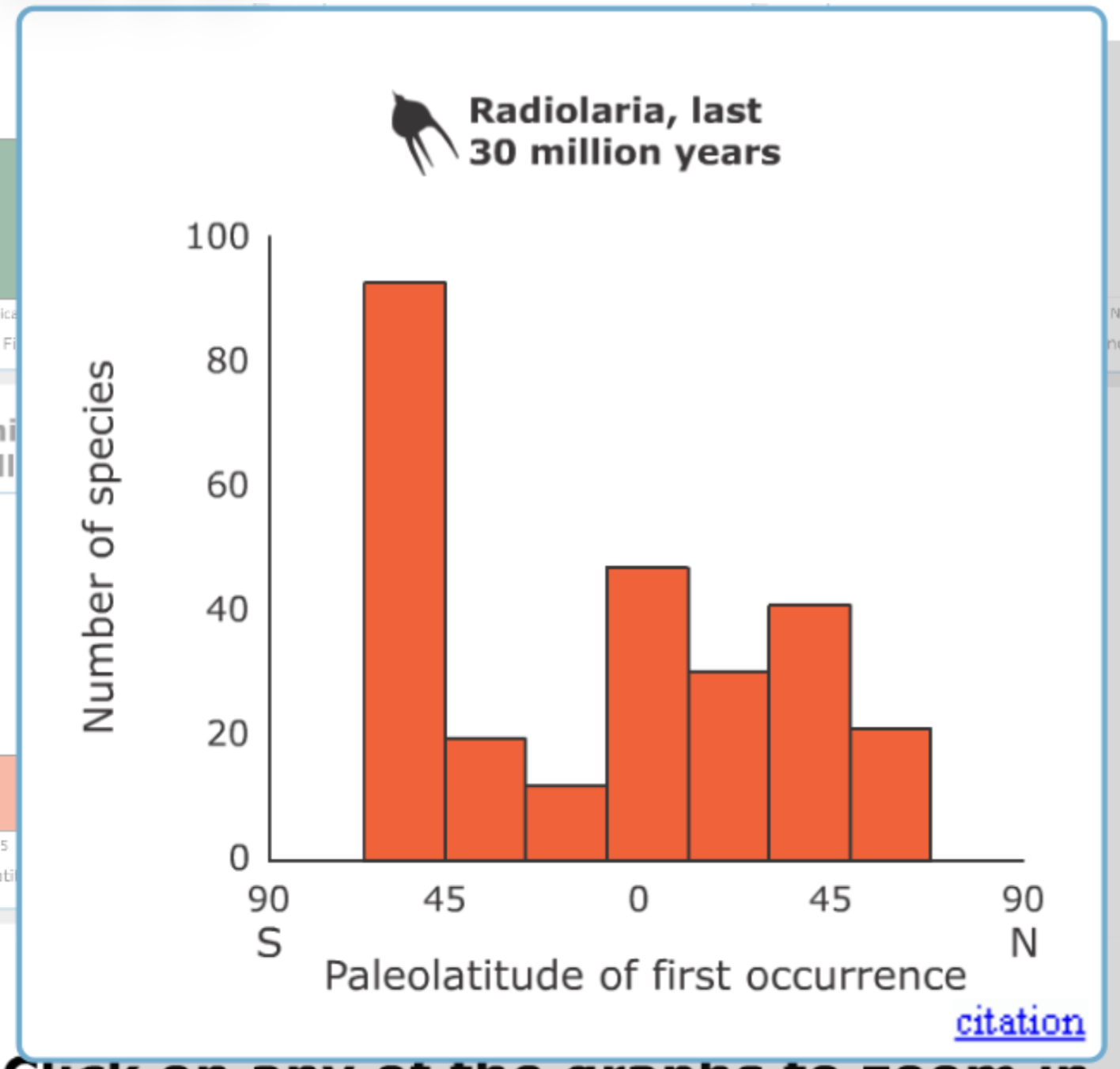
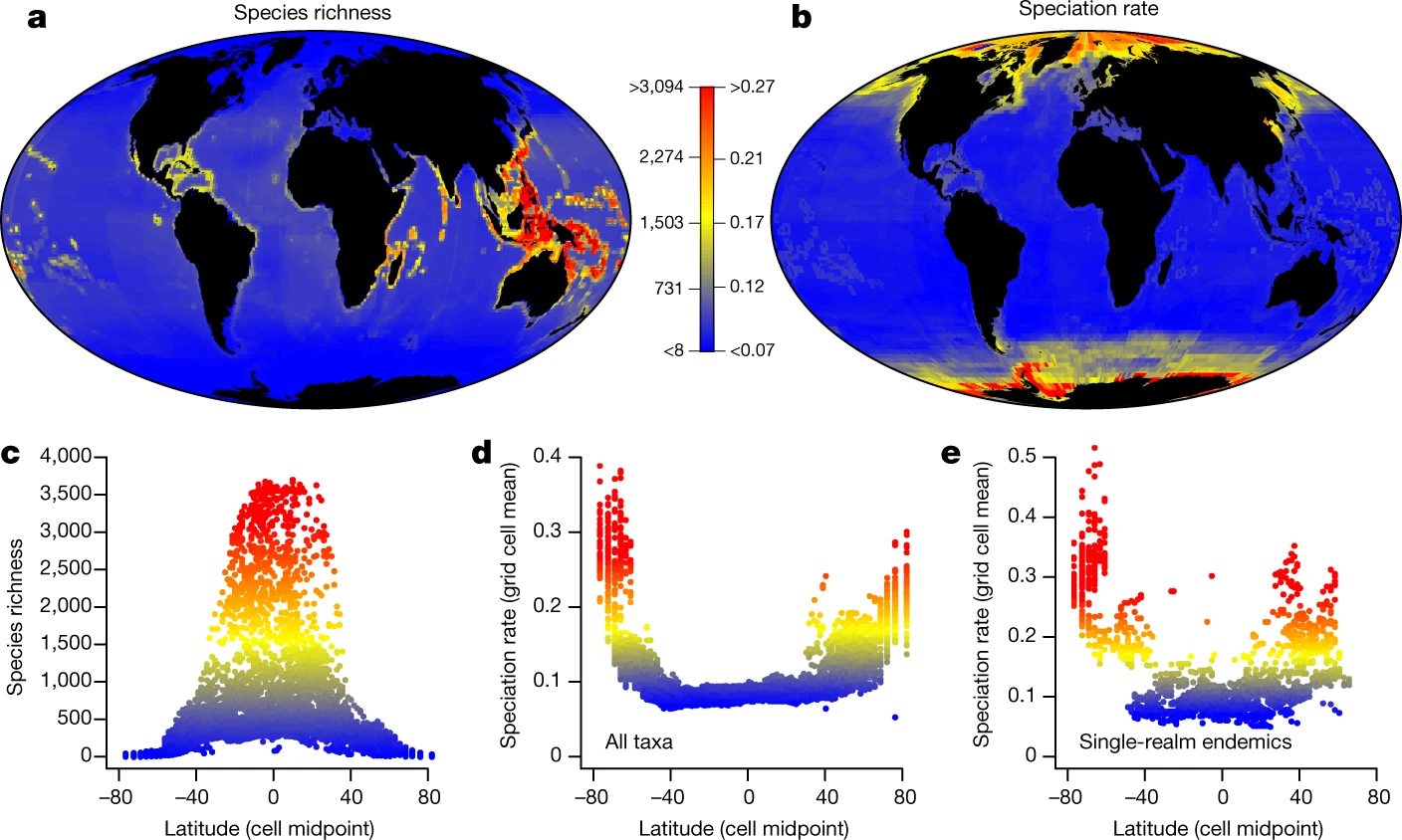
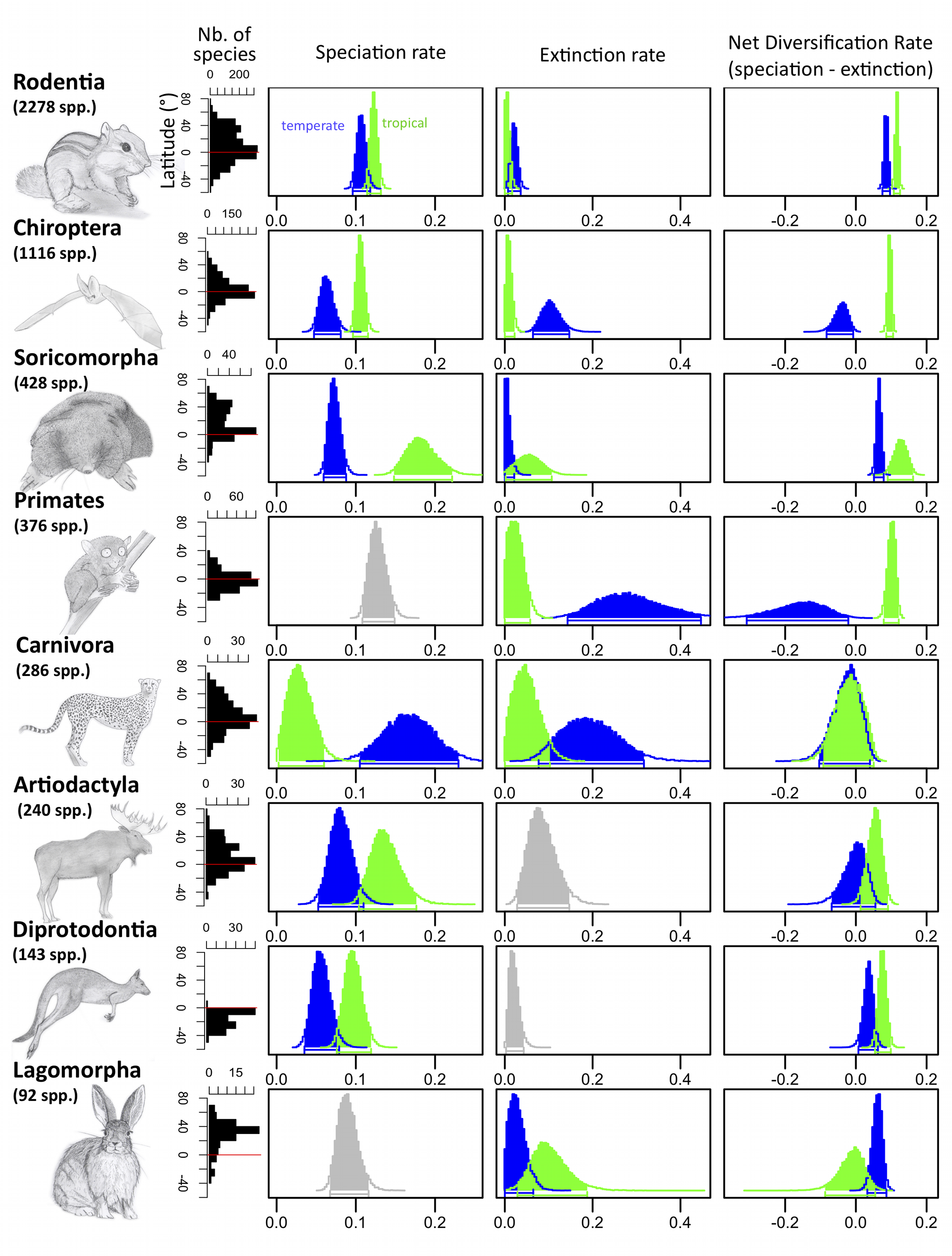
Rates of speciation
True in some cases
![]()
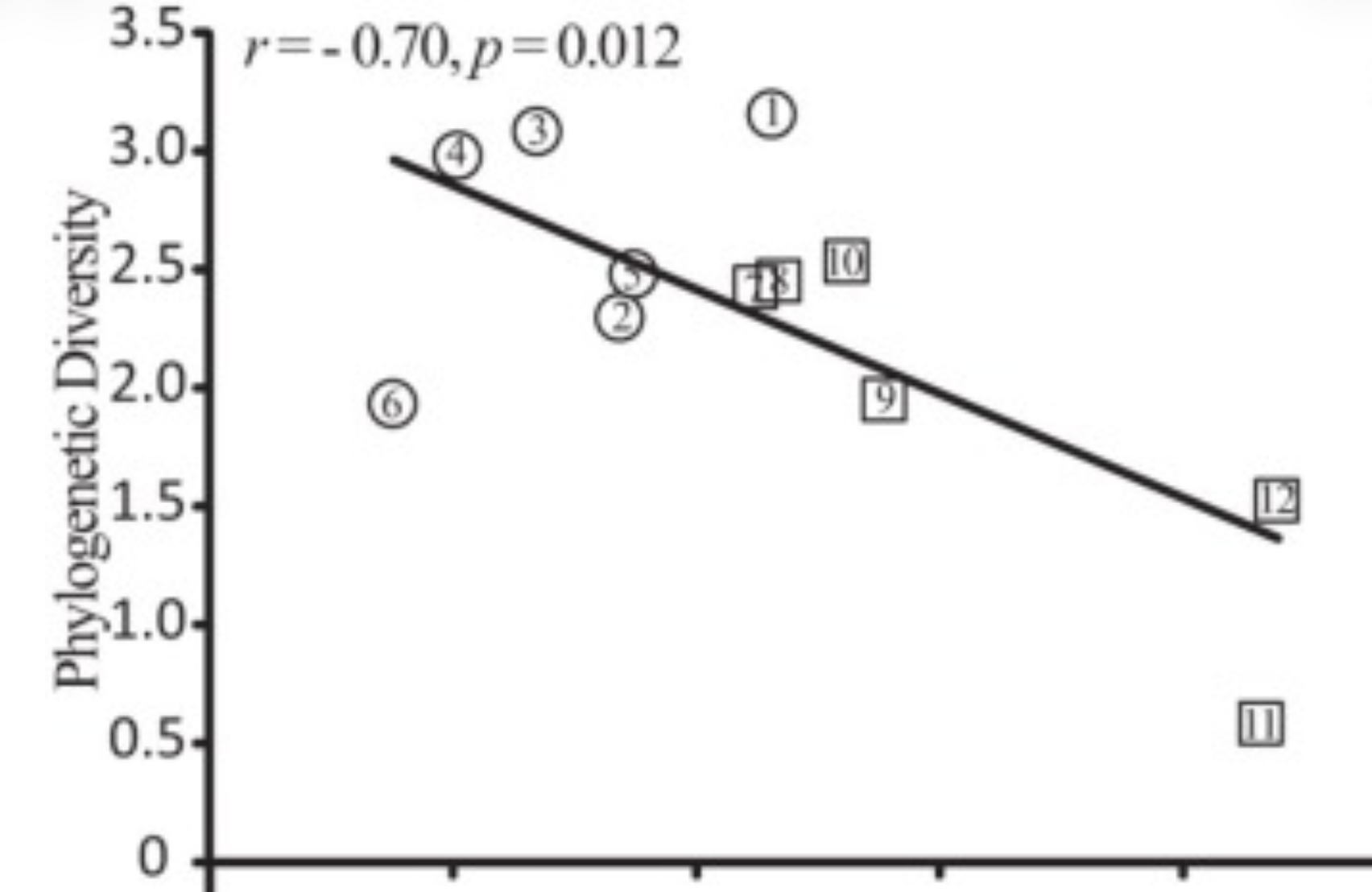
But not in all cases
![]()
“Inverse gradient in speciation rate of fishes”
Balance between speciation and extinction
Rates of immigration
It’s possible that rates of speciation and extinction are equal worldwide, but species move into the tropics more than they move out
It would be nice to test this hypothesis… but the way fossilization works makes it hard!
- Fossil records are much more robust for temperate than tropical regions
- This is because of how fossils form, and because of where we’ve looked
- This makes it hard to know where species arose!
- If a species is now living in the tropics but its only known fossils are temperate…
- We still don’t know where it originated
So, patterns of LDG are multi-causal
Higher speciation rates and lower extinction rates both play a role, likely varying by taxonomic group
Whether tend to move into the tropics more remains unclear, but potentially true for some groups
- It’s probably also true that for other groups, the tropics are an “engine” of biodiversity, and that these new tropical species move out of the tropics
And the LDG is not ubiquitous!
Can we explain a “smaller” pattern?
As we often do, let’s simplify the complexity
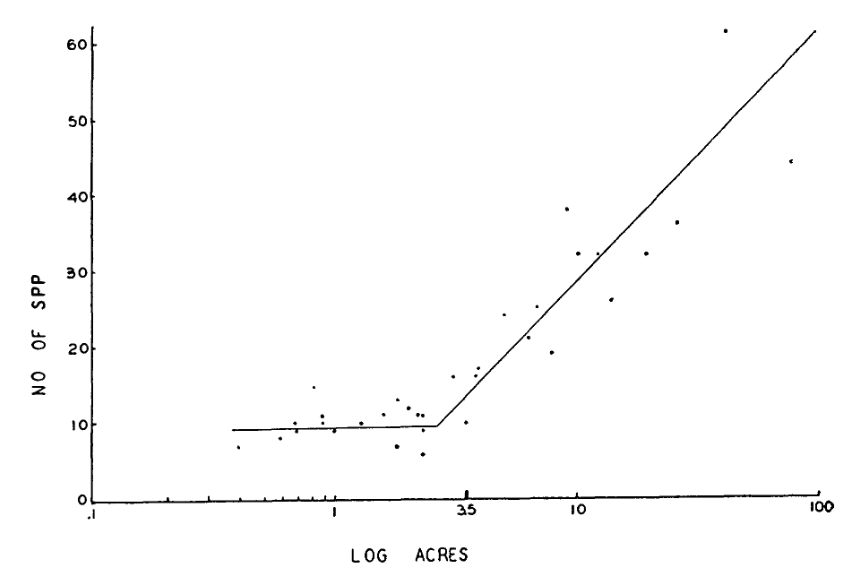
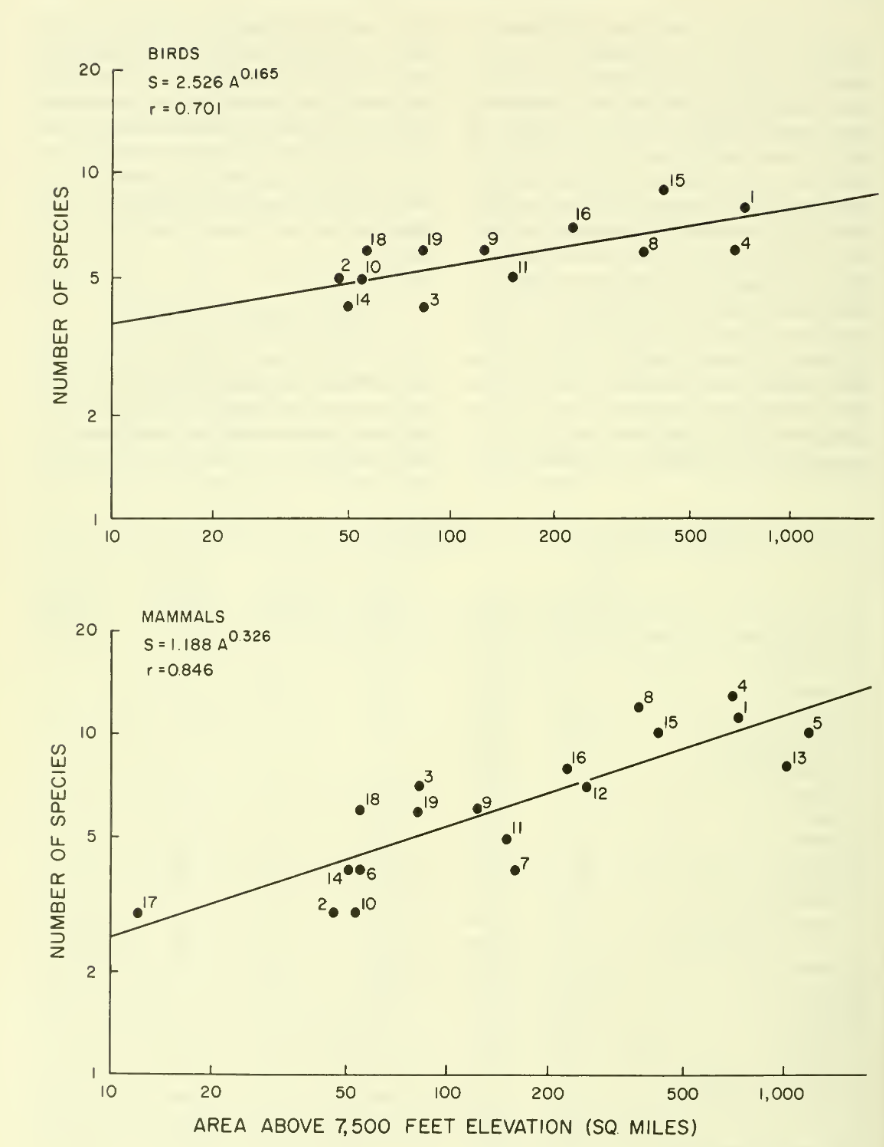
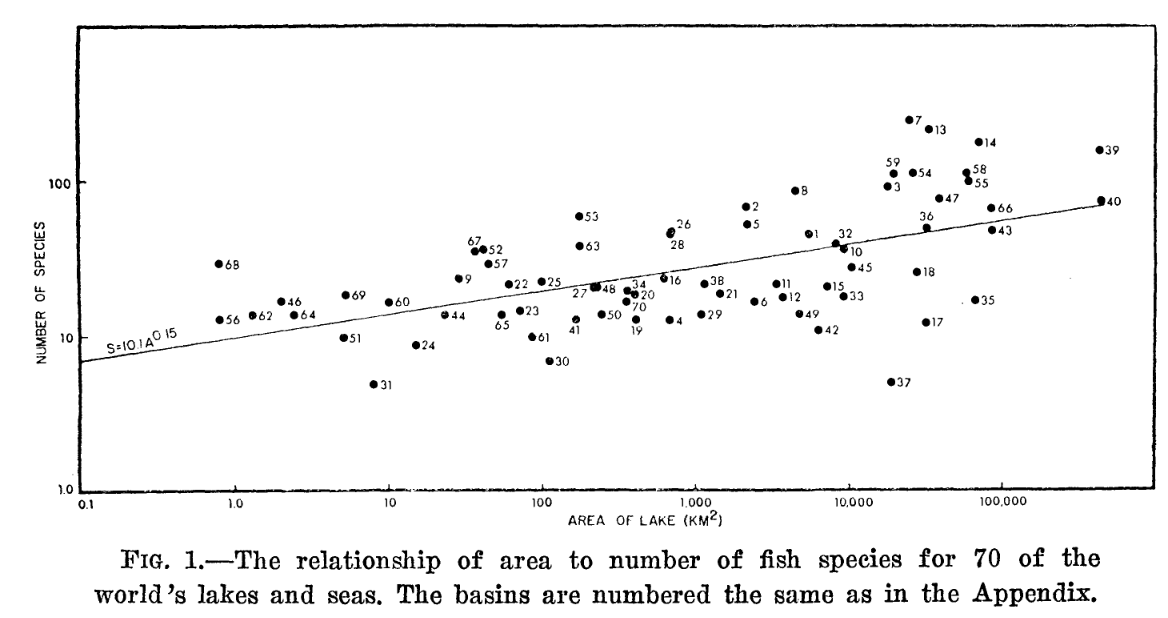
- For many decades, ecologists have noticed that biodiversity varies predictably across islands:
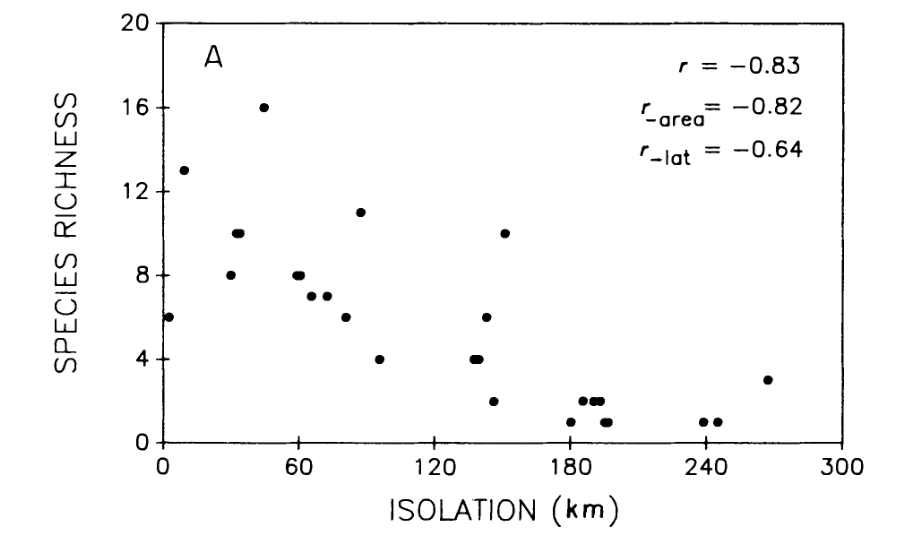
We have also seen that island biodiversity varies by isolation:
Goal
Explain a simple biodiversity pattern:
Why, across systems, are larger islands more biodiverse?
Why, across systems, are more isolated areas less biodiverse?
Explaining island biodiversity
Processes that govern species richness:
\(\uparrow\) by immigration of new species
\(\downarrow\) by local extinction (‘extirpation’) of existing species
\(\uparrow\) by local speciation
Let’s assume speciation is very slow and not relevant to our dynamics
- Note that over sufficiently long timescales, speciation can be important!
- e.g. adaptive radiation of finches on Galapagos or of cichlid fishes in Lakes Tanganyika, Malawi, and Victoria
- But we are setting this aside for now.
Explaining island biodiversity
- Species richness determined by a balance of immigration and extinction
- \(\uparrow\) by immigration of new species
- \(\downarrow\) by local extinction (‘extirpation’) of existing species
- What determines rate of immigration of new species and local extinction?
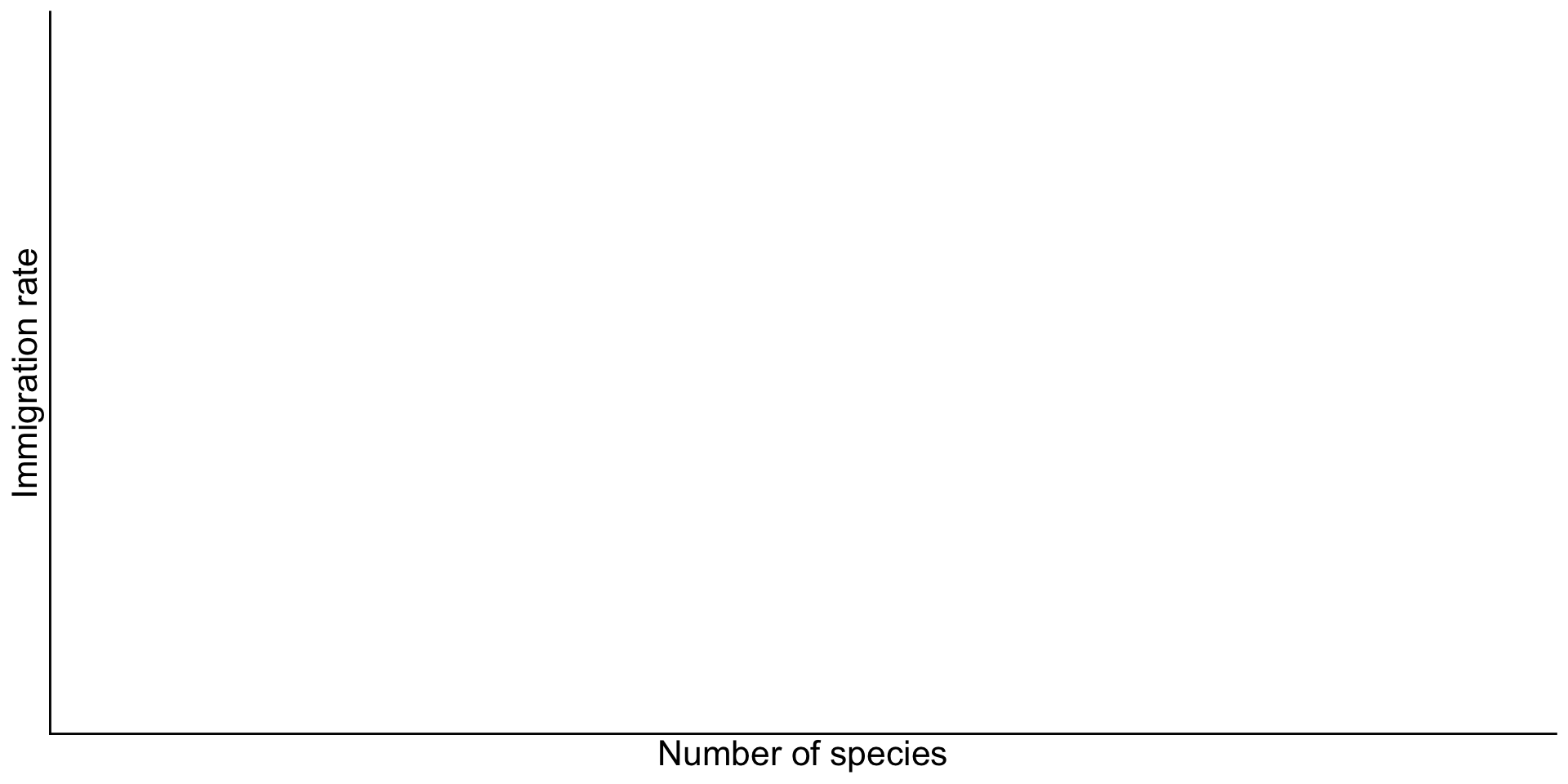
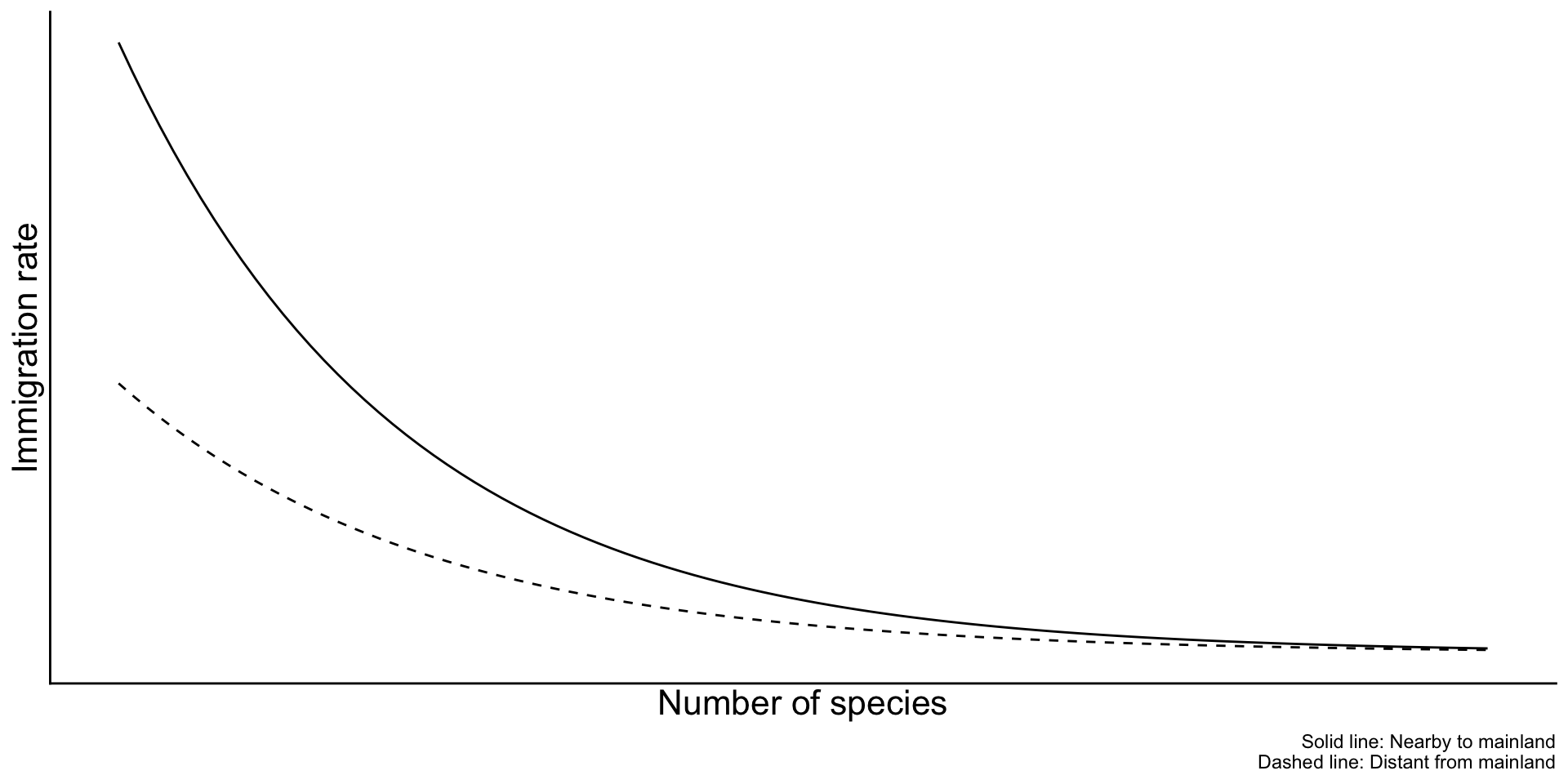
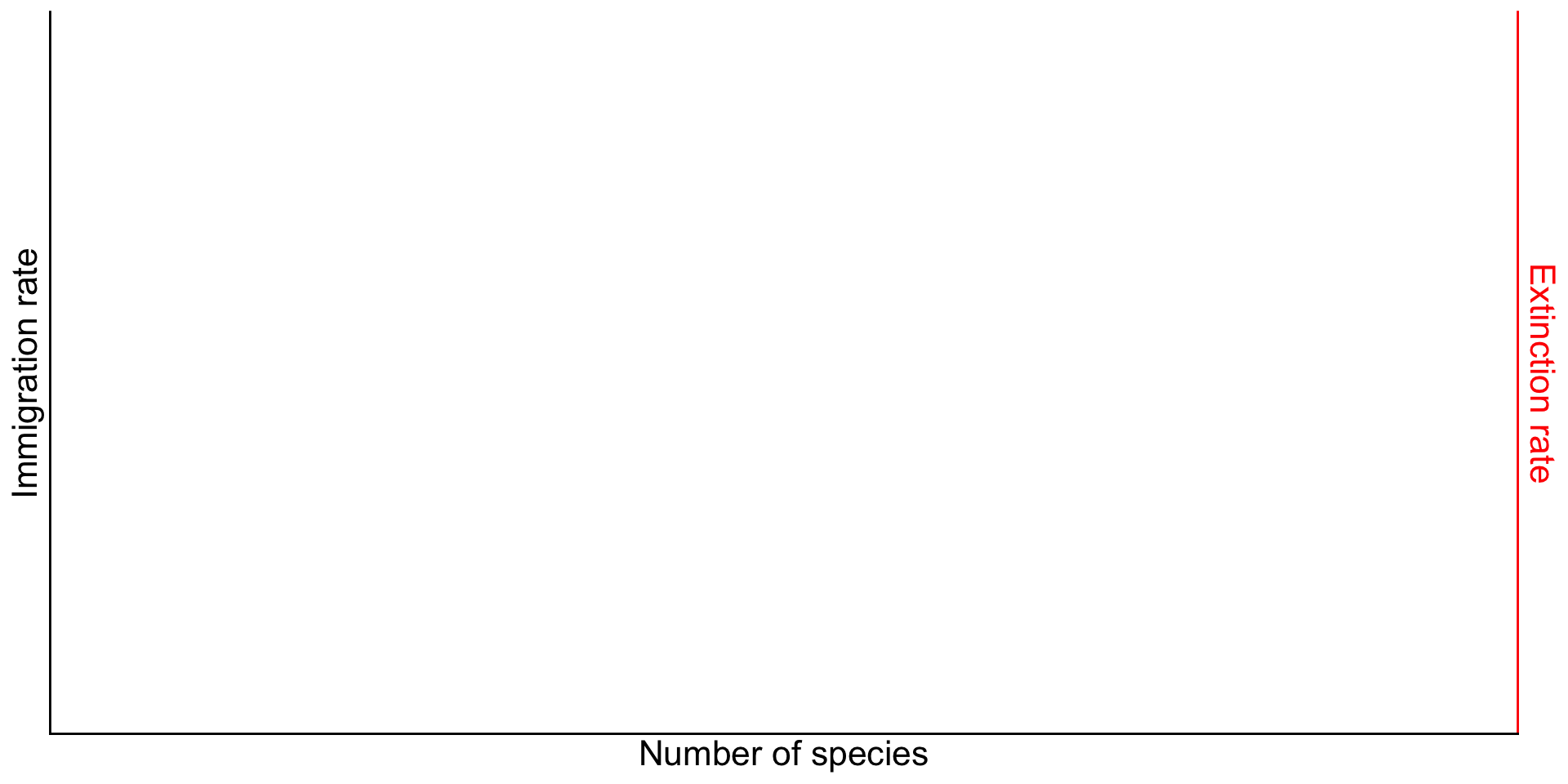
What would this relationship look like on a graph?
Immigration is a function of island biodiversity and of proximity to mainland
… but net biodiversity also depends on rates of extinction
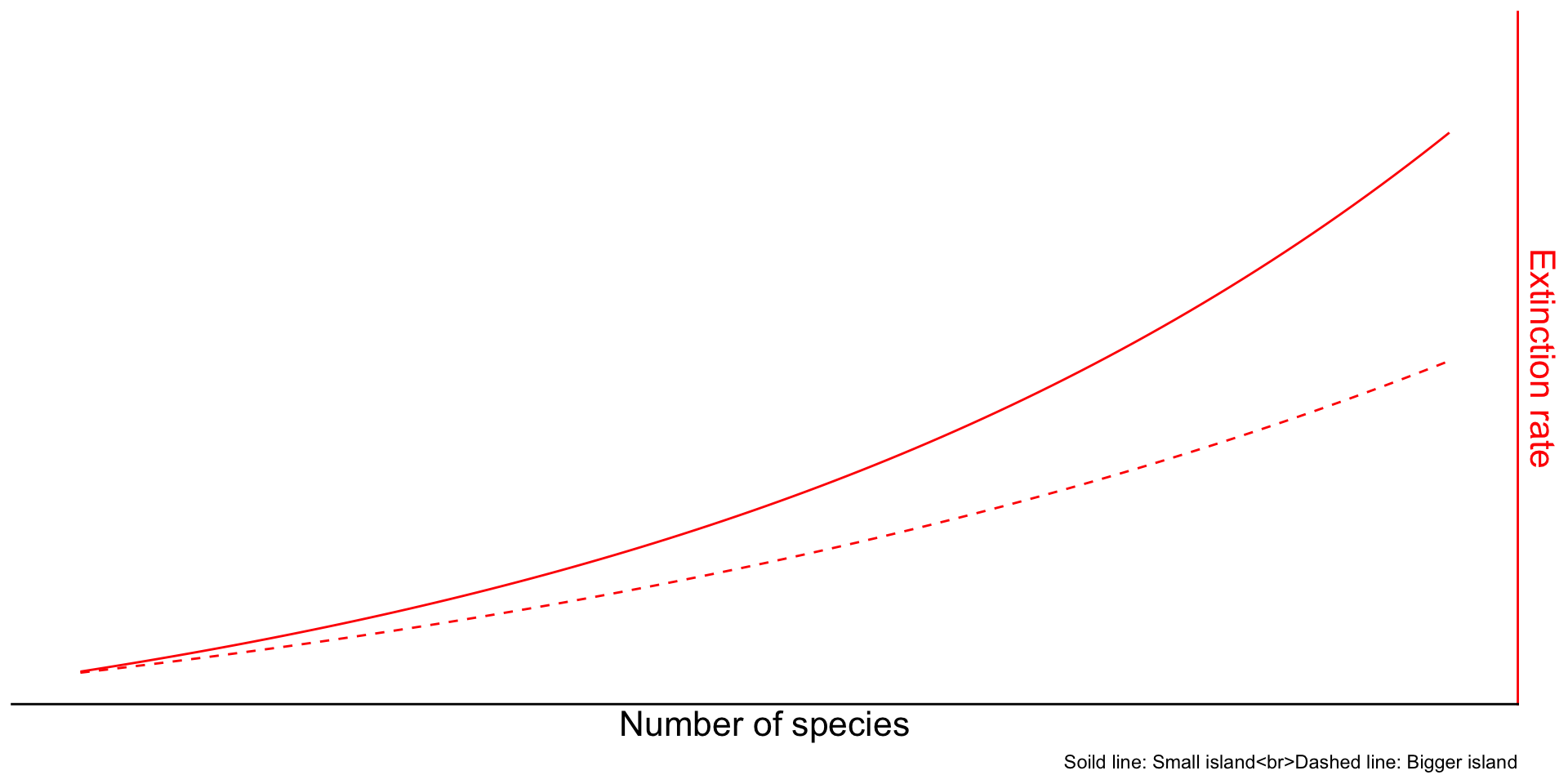
What determines rate of local extinction?
- Size of island
- On smaller islands, species are more likely to go extinct just by randomness (“stochastic” extinction of smaller populations)
- Number of species already on the island
- If there are lots of species on the island, that means the number of possible extinctions is higher
On the following graph, draw 2 lines: one for a big island, one for a small island
On the following graph, draw 2 lines: one for a big island, one for a small island
![]()
This gives rise to some predictions
- In an group of islands, we expect richness to be positively correlated with island size and with proximity to mainland
- Islands that are small and distant from mainland should be least species-rich
- Islands that are big and close to mainland should be most species-rich
How to test this model?
- We can’t just go to islands and count species – lots of processes (like speciation) might be at play
- We need to study islands that start at zero diversity and accumulate species.
Why does this matter?
We’re surrounded by islands:
- Lakes are islands
- Patches of forest are islands
- Strips of grasslands near highways are islands
- Islands are islands
Islands are useful metaphors for conservation:
We define distinct “marine protected areas”, with regions of commercial fishing in between
We define natural parks or other terrestrial protected areas, with urban regions in between
Can this theory help us make decisions?
- E.g. If you can conserve 1000 km^2, how best to allocate effort?
- “SLOSS” debate
Perhaps conserving large chunks of habitat is preferable to conserving multiple small chunks?
Extensions
We’ve made a series of simplifying assumption:
- Immigration and (local) extinction depend on proximity to mainland and size only
- e.g. Interactions between species are assumed not to be relevant
- Connectivity between islands doesn’t play a role
But we have accumulating evidence that connectivity between islands makes a big difference!